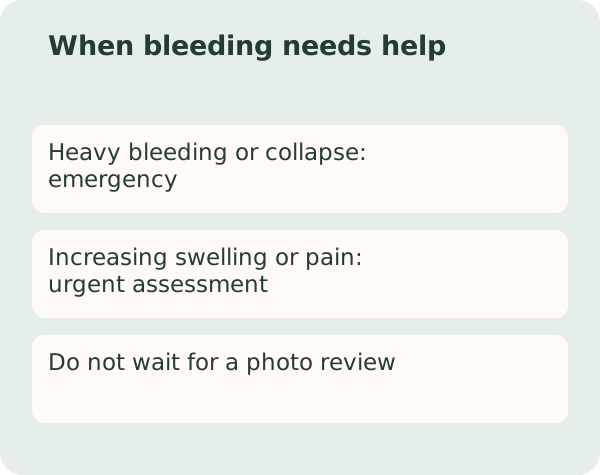
- Heavy or uncontrolled bleeding needs emergency help now.
- Do not massage or drain a suspected hematoma.
- Update the travel and follow-up plan after evaluation.
When bleeding needs emergency help
Heavy or uncontrolled bleeding, fainting, collapse or loss of consciousness needs emergency medical help immediately. Do not wait for another symptom, a photograph review or a reply from the operating clinic. Sudden breathlessness, serious breathing difficulty, new confusion or chest pain also needs emergency assessment. These symptoms can have several causes; identifying the cause is the emergency team's job. [4][5][19]
In South Korea, call 119 for emergency medical help. Elsewhere, use the local emergency number. Tell the operator that you recently had abdominal surgery, describe the problem and give your exact location. Do not drive yourself. If you are still at the surgical facility, alert staff immediately. Follow the emergency operator's instructions while help is coming. Your companion can bring medicines and operation details if they are readily available, but collecting records must not delay the call. [6]
Swelling or suspected bleeding accompanied by cold, clammy skin, feeling faint or severe worsening pain also needs emergency assessment. [1] A person can be seriously unwell without blood being visible outside the body. Do not use a dry dressing as a reason to dismiss collapse or severe symptoms.
Cold, clammy skin or feeling faint can accompany shock; suspected shock needs emergency help. [22]
Which other changes need urgent review?
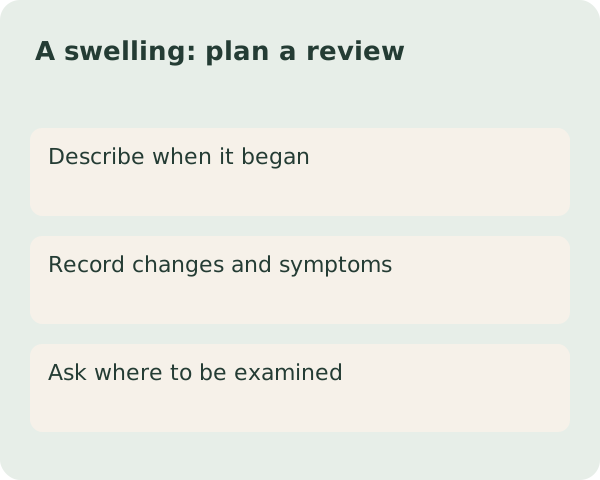
Contact the surgical team urgently about rapidly increasing abdominal swelling, a new tense or increasingly painful area, or bleeding that is new or increasing. Ask where you can be examined, not just whether a photo looks acceptable. NHS tummy-tuck information advises contacting the operating clinic as soon as possible for severe pain or unexpected symptoms; Hull's procedure-specific discharge guidance also directs patients to report bleeding, swelling or discharge. [2][9]
If the team cannot be reached promptly, obtain urgent local medical assessment rather than waiting until the next routine appointment. Use emergency services for the severe symptoms described above. A receptionist or booking coordinator may help connect you, but a clinical concern needs a clinician's assessment.
Explain whether the change developed suddenly, has continued to increase or appeared after a period of improvement. You do not need to decide that it is definitely a hematoma before asking for help.
What the word hematoma means
A hematoma is a collection of blood outside blood vessels. After surgery, blood may collect within the operated tissues rather than escaping through the incision. A larger collection can press on surrounding tissue and produce pain or swelling. The word is also spelled haematoma in many British sources. [1]
The NHS lists a blood collection beneath the skin as a possible complication of abdominoplasty, while ASPS lists bleeding among the procedure's risks. This does not mean every swollen area is a hematoma or that every hematoma has the same severity. [2][3]
It is useful to separate three questions: Is there a collection? Is bleeding continuing? What effect is it having on the wound and your overall condition? A diagnosis and management plan should address your actual findings, rather than simply attaching a label to a lump.
Why bruising cannot settle the question
A bruise is skin discoloration caused by blood leaking from small vessels beneath the skin. Its appearance can change as it heals. Bruising and a deeper hematoma are related forms of bleeding into tissues, so they are not reliably distinguished by saying that one particular colour is harmless and another is dangerous. [7]
Pain and bruising can occur after a tummy tuck, but the presence of an expected symptom does not make every degree or pattern of that symptom normal. [2] Report a marked change, increasing swelling or worsening pain instead of trying to match your abdomen to another patient's photograph.
Photographs also vary with lighting, angle, skin tone and dressings. If the team requests an image, use the agreed private route and explain what has changed since the previous review. A picture may help communication, but it cannot establish how much blood is present beneath the skin or replace an examination when one is needed.
How a seroma and infection differ
A seroma contains serous fluid, rather than a collection consisting of blood. It can form in a space near an operation site and cause swelling, tenderness or a pulling sensation. Cleveland Clinic explains that clinicians may use examination and sometimes ultrasound to assess a suspected seroma. Touching a swelling yourself cannot reliably establish its contents. [8]
Do not treat clear-looking drainage, softness or the day symptoms began as proof that a collection is safe to ignore. This guide cannot tell you which type you have. Ask the assessing clinician what they think is causing the swelling and what evidence supports that explanation.
Infection is another concern, and it may occur alongside a collection. Increasing wound pain, warmth, redness, pus, wound separation, fever or feeling unwell should prompt immediate clinical advice. Fever is not required. If the operating team is unavailable, seek local assessment. These changes should not be dismissed as a bruise changing colour. [20]
Give the clinician a useful account of the change
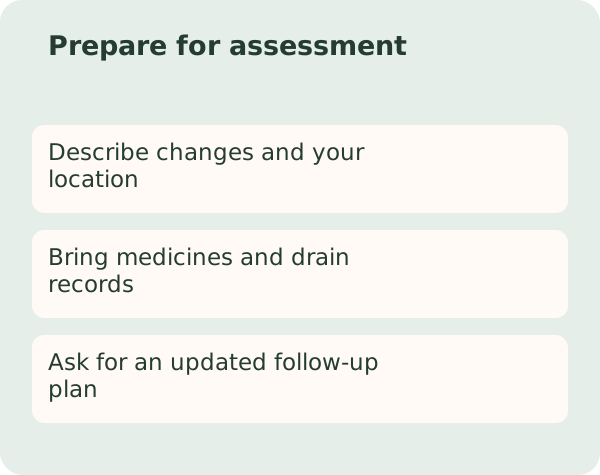
When you call, start with the operation and date, your surgeon or facility and your current location. Describe the specific change: for example, one area has become noticeably larger since the previous check, the dressing has new blood on it, or the pain has increased despite following the prescribed plan. State what you observed rather than guessing the diagnosis.
Explain when it started, whether it is still changing and whether you feel faint or otherwise unwell. Mention any recent fall, knock or other event, without assuming it caused the problem. If you have drains, say which one has changed and have the record available if you were asked to keep one.
Tell the team which medicines you take and the time of recent doses. Ask them to repeat the destination and urgency of the assessment. If the person assisting you is making the call, they should describe your current condition, not only what it looked like earlier.
Treat drain information as part of the picture
Drains may be used after abdominoplasty to remove blood or fluid. Your team should explain how to care for your own device and what changes to report. A drain is not a home test that can rule out a complication. New swelling or severe symptoms still need assessment even when the collection container does not appear full. [10][15]
If you have been taught to measure output, record it in the way your team requested. Report an unexpected increase, fresh bright-red drainage, a sudden, unexpected reduction, or a system that is no longer working. MSK's Jackson-Pratt instructions identify bright-red drainage and device problems as reasons to contact a clinician, but its numerical thresholds are not a universal plan for every tummy-tuck patient. [11]
Do only the care tasks you were taught for that drain. Do not pull it out, reposition it inside the wound or reinsert it if it comes out. Contact the team about displacement or difficulty managing it.
Do not independently change medicines to manage bleeding
Give the assessing team a complete medicine list, including prescriptions, injections, painkillers bought without a prescription, vitamins and herbal products. Keep unfamiliar packaging available so the active ingredient can be checked. Mention anything taken since discharge, even if you considered it a supplement rather than a medicine.
Anticoagulants can increase bleeding, but they may have been prescribed to prevent or treat dangerous blood clots. NHS guidance says to stop them only on a healthcare professional's advice and to check other medicines or remedies for interactions. Do not decide on your own to omit, double or restart a dose. [12]
If bleeding is severe or will not stop, seek emergency care first and tell the treating team what you take and when you last took it. Ask that team for immediate instructions about any dose that is due. Do not delay the assessment while trying to obtain a routine prescription answer. [13]
What a clinical assessment may involve
The clinician will consider your symptoms and examine the affected area. Imaging may be useful when they need to understand a collection that cannot be assessed adequately from the surface. The choice of investigation depends on the clinical situation; this guide does not establish that every patient needs a scan. [1]
Bring the operation details and medication list if available. Tell the clinician if the concern is changing while you wait. Ask what they are checking, whether the swelling is thought to contain blood or another fluid, and whether there is concern about continuing bleeding.
If observation is recommended, ask what observation means in practice: where it happens, who reassesses you and which changes require immediate return. If an investigation is arranged for later, clarify what to do before the result is available. An appointment or pending test is not a reason to ignore deterioration.
Why treatment decisions differ
Treatment follows the findings, not the size of a mark in a photograph. BAAPS explains that some small postoperative blood collections resolve, while bleeding after abdominoplasty may need surgical drainage. A collection can also become infected. These possibilities are reasons for assessment, not instructions to wait at home until a swelling settles or starts leaking. [14]
If a procedure is recommended, ask what problem it is intended to address, where it will take place and what care you will need afterwards. Removing a collection and dealing with its cause are clinical decisions. A recommendation made to someone with a seroma is not automatically the right treatment for a hematoma.
Do not puncture, squeeze, forcefully massage or try to empty the swelling yourself. Do not open the incision, remove stitches or tighten a binder in an attempt to treat suspected internal bleeding. Home treatment for an ordinary minor bruise should not be transferred to a fresh abdominal operation without your team's advice.
Get a revised aftercare plan after the review
Before leaving the assessment, ask which instructions remain unchanged and which have been replaced. ASPS recovery guidance covers wound and drain care, medicines, warning signs and follow-up. After an unexpected bleeding concern, those instructions should reflect what was found and any treatment you received. [15]
Clarify dressing care, the use of any garment, permitted activity and who can change those restrictions. Ask whether another person needs to help you and whether a planned drain-removal or wound-review appointment has changed. Do not return to strenuous activity simply because a dressing is dry or pain medicine makes you feel more comfortable.
Record the next clinical review and the contact route for a recurrence. If the original surgeon and another hospital are both involved, ask who is responsible for the next decision. Make sure you and your companion understand the same current plan rather than working from different messages.
Reassess travel rather than relying on the original itinerary
A bleeding concern can change whether the planned flight, hotel departure or onward journey is appropriate. Tell the treating clinician about the actual travel date and journey, and ask whether further observation or treatment is needed before you leave. An earlier discussion of fitness to travel does not settle the question after a new complication.
NHS advice on cosmetic surgery abroad stresses knowing where follow-up will happen, what happens if there are complications and what additional care may cost. Ask about those arrangements before booking, then review them if the situation changes. [16]
Seek assessment before travelling if a problem is worsening, even when changing bookings creates extra costs or wait until you reach home to investigate a worsening problem. Ask your support person to help with accommodation and transport changes while the clinical issue is addressed. Insurance and payment questions matter, but they must not delay urgent treatment. No general number of postoperative days can provide individual clearance after a bleeding episode.
Keep the complication in the medical handover
Before returning home, obtain an updated record rather than relying only on the original operation summary. CDC medical-tourism guidance recommends obtaining medical records so subsequent clinicians can understand the care delivered abroad. If another facility treated the bleeding concern, request its account too. [17]
Ask the treating team to document the diagnosis or remaining uncertainty, examinations and investigations, any additional procedure, medicine changes and the planned follow-up. Keep the name and contact details of the clinician responsible for unresolved results. A receipt describes a payment, not the clinical treatment.
If continuing care is needed at home, confirm that a receiving clinician has agreed to provide it and has the relevant information. Do not assume an overseas clinic's message means that handover has occurred. For serious symptoms after returning home, use local emergency care rather than waiting across time zones for a reply.
Ask about bleeding risk before choosing surgery
ASPS includes bleeding, fluid collection and possible further surgery in its tummy-tuck risk information. Discuss these risks during the consultation, including what your own health history and proposed operation mean for the plan. A general complication rate cannot tell you exactly what will happen to you. [3]
Explain previous surgery, any unusual bleeding history and all medicines or supplements. Cleveland Clinic's tummy-tuck guidance specifically advises discussing medications and not stopping them without healthcare-provider approval. Ask who will coordinate a change if the surgical team and your usual prescriber are different people. [21]
Practical questions matter too: who can examine you outside office hours, where emergency treatment would occur and how you would reach it from your accommodation. Ask what additional visits or a longer stay could involve. Clear arrangements cannot guarantee that bleeding will not occur, but they can reduce uncertainty about seeking help.
A listed clinic for a planning conversation
VeryGood Plastic Surgery is listed in this atlas, and its official body-contouring page lists abdominoplasty. That makes it a relevant clinic to ask about the proposed procedure and the response to postoperative concerns. It does not establish an individual bleeding-management plan, emergency capacity or a better safety record than another provider. [18]
Use the clinic profile and official service page to prepare questions for the treating team: who performs the operation, who assesses a suspected hematoma, and where would a patient be transferred if hospital care were needed? Confirm current follow-up and language arrangements directly. If you already have severe symptoms, seek emergency care instead of using a consultation request or booking form.
Explore the profiles mentioned in this guide
Use these source-linked profiles to prepare questions and confirm your individual plan directly.
Continue with the related guides
Put this information into your consultation
Use the consultation checklist and budget worksheet to record your questions. Explore tummy tuck clinics in South Korea and doctor profiles before asking a clinic about your individual plan.
Sources & further reading
Source links support the topic or the attributed provider details. Practical preparation prompts are editorial guidance. Checked 4 November 2026
- Cleveland Clinic: Hematoma ↗
- NHS: Tummy tuck (abdominoplasty) ↗
- American Society of Plastic Surgeons: Tummy tuck risks and safety ↗
- North West Ambulance Service: When to call emergency services ↗
- University Hospitals Birmingham: Wound care advice following your surgical procedure ↗
- Visit Seoul: Medical emergencies ↗
- Cleveland Clinic: Bruises (ecchymosis) ↗
- Cleveland Clinic: Seroma ↗
- Hull University Teaching Hospitals: Abdominoplasty discharge advice ↗
- Chelsea and Westminster Hospital: Abdominoplasty surgery ↗
- Memorial Sloan Kettering: Caring for your Jackson-Pratt drain ↗
- NHS: Anticoagulant medicines, considerations ↗
- NHS: Anticoagulant medicines, side effects ↗
- British Association of Aesthetic Plastic Surgeons: Tummy tuck (abdominoplasty) ↗
- American Society of Plastic Surgeons: Tummy tuck recovery ↗
- NHS: Cosmetic surgery abroad ↗
- CDC Yellow Book: Medical tourism ↗
- VeryGood Plastic Surgery: Official body-contouring service page ↗
- NHS: Pulmonary embolism ↗
- University College London Hospitals: Preventing surgical wound infections ↗
- Cleveland Clinic: Abdominoplasty (tummy tuck) ↗
- St John Ambulance: Shock ↗