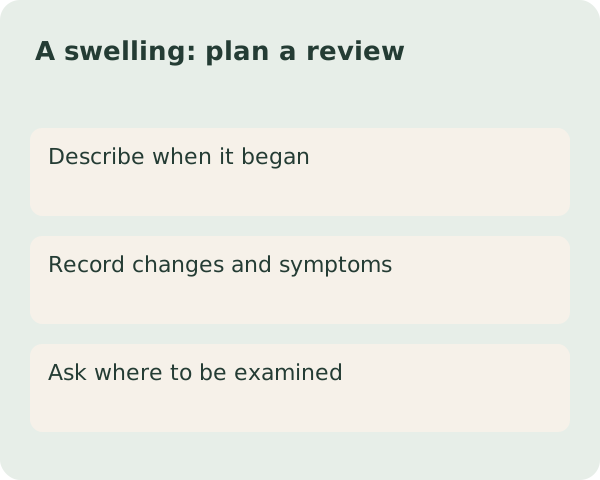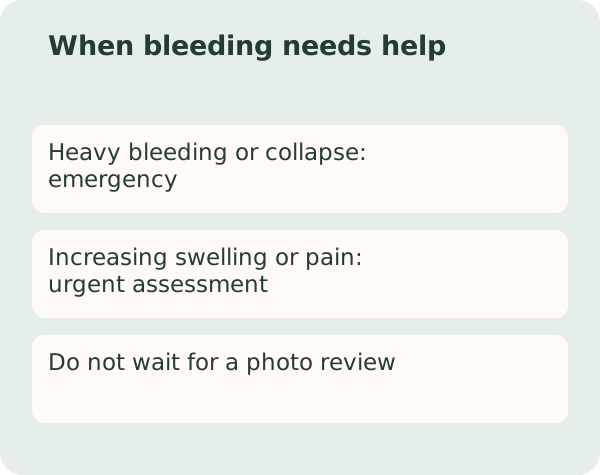
- Request an individual clot-risk assessment.
- Do not self-prescribe clot-prevention medicines.
- Chest symptoms or collapse require emergency help.
Which history affects your clot-risk assessment?
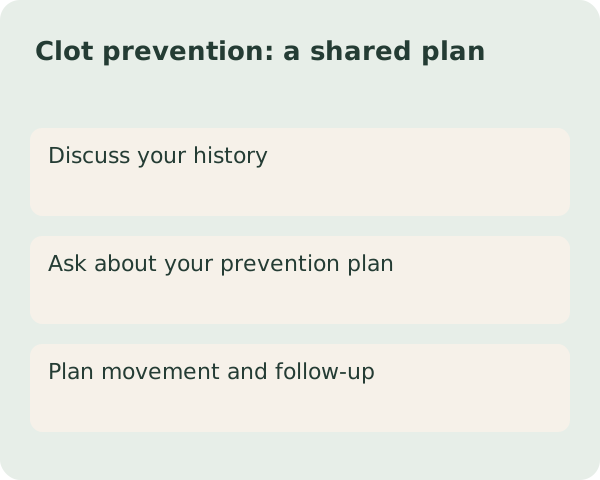
Tell the surgeon and anaesthesia team about any previous clot, clotting disorder and relevant family history. Bring a complete medicine list, including hormone-related medicines, and describe your recent and planned travel. Mention limitations that may make walking difficult. Do not decide a detail is irrelevant because the operation is cosmetic. Ask the clinician to explain how the information influences the proposed operation, any combined procedures and the recovery plan. A documented assessment is more useful than a general statement that the clinic’s patients rarely have problems.
What can a prevention plan include?
Ask whether the plan includes movement instructions, compression stockings, medication or other measures, and why. Different components serve different purposes. A cosmetic abdominal garment is not automatically a substitute for a prescribed clot-prevention measure. If medication is prescribed, request instructions, side effects to watch for and the process for questions or missed doses. Do not start aspirin or an anticoagulant on your own. If you already take one, the prescribing clinician and surgical team should coordinate any change rather than leaving you to balance bleeding and clotting risks.
Which symptoms suggest DVT or pulmonary embolism?
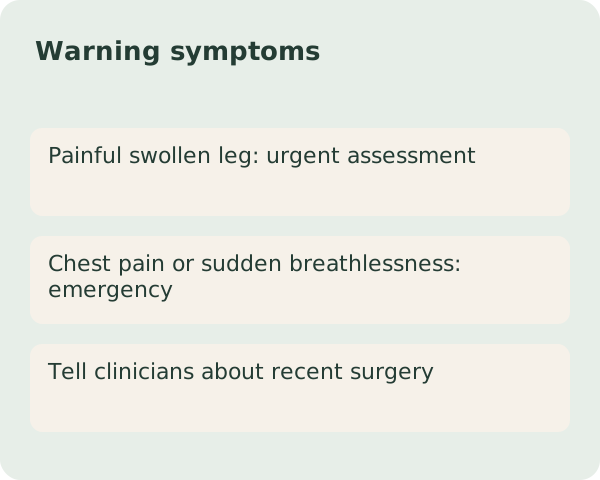
NHS information identifies symptoms such as pain and swelling in a leg as possible DVT concerns that need urgent assessment. Sudden breathlessness, chest pain, coughing blood or collapse can indicate pulmonary embolism and require emergency medical help. Do not massage a painful swollen leg or wait for a routine cosmetic follow-up. Symptoms cannot be ruled out by your age, fitness or an uneventful operation. Tell the assessing team about the recent surgery and any travel. Take the medication list and operative summary if readily available without delaying care.
How should flights and long transfers be planned?
Ask how planned flights and long ground transfers affect your recovery arrangements. Discuss the real journey, including airport waiting, connections and travel from the airport, not just flight duration. Ask when the surgeon will reassess travel readiness and what would postpone it. Arrange assistance with luggage so travel does not also require lifting beyond your restrictions. A business-class seat does not replace clinical advice. If your plans change, update the team; a prevention plan made for one itinerary may need review when the journey becomes longer or more complex.
Who reviews prevention after discharge?
Write down which clinician is responsible for clot-prevention questions after you leave the facility. If another doctor changes a medicine, ensure the relevant teams know. Do not continue or stop a preventive treatment merely because another patient followed a different schedule. Ask how long the plan applies and whether it changes before travel. Keep instructions accessible to your companion and to clinicians at home. Prevention is an ongoing set of coordinated decisions, not a single form signed before surgery.
What a clot is and why it matters after surgery
A deep vein thrombosis (DVT) is a clot in a deep vein, often in a leg. Part of a clot can travel to the lung, causing a pulmonary embolism (PE), which can be life-threatening. Surgery and periods of reduced movement can increase risk. This does not mean every postoperative symptom is a clot, and risk is not uniform. A clinician should assess the whole history and explain a plan specific to the operation and the patient. [1][2][3]
A tummy tuck can involve anaesthesia, time in theatre and a recovery period with less mobility. An international trip may add airport waits, a flight and long transfers. The travel discussion is therefore not a single question about the number of hours in the air. Consider the entire door-to-door journey and whether your team expects you to move comfortably, manage medications and obtain help if symptoms occur.
Which symptoms need urgent or emergency care?
A new painful, swollen, warm or discoloured leg may indicate DVT and needs urgent medical assessment. Symptoms can be subtle or have another cause; a normal-looking leg does not provide a reliable all-clear. Sudden breathlessness, chest pain, coughing blood, fainting or collapse can indicate PE and require emergency medical help. Do not wait for a routine appointment or an online reply when these symptoms occur. Tell the emergency team about the operation and any recent long journey. [1][2]
Know the local emergency number and the location of an emergency department before surgery. Ask your companion or accommodation staff how they would call for assistance. A written clinic number is useful for non-emergency questions, but it should not replace emergency services for chest symptoms, severe breathing difficulty or collapse. Keep your medication list and discharge record accessible if they can be taken without delaying care.
Your history changes the assessment
Before booking, tell the surgeon and anaesthesia clinician about previous blood clots, known clotting conditions, strong family history, major illnesses and operations, limited mobility, and your full medication list. Include hormonal medicines and any blood thinner, as well as medicines bought without a prescription. Mention if you have had an adverse bleeding event. The team may need to coordinate with the clinician who prescribes an existing medicine. Never stop or start it on your own to fit an operation date. [3]
Describe all proposed procedures and whether they will be combined. The team should assess the intended operation, your health and postoperative support rather than give a universal risk score from a photograph. Ask what information is still needed before a decision and whether an in-person examination or another specialist opinion is required. A risk assessment supports an informed discussion; it cannot guarantee that a complication will not occur.
What prevention may involve
Depending on your individual assessment, clinicians may recommend early movement, prescribed stockings or mechanical compression, medication, or a combination. Ask what applies to you and how it fits with wound care, dizziness, pain and your ability to walk. A waist compression garment is not automatically a substitute for leg-specific clot-prevention measures. Follow the team’s instructions about safe mobilisation; do not force activity beyond the plan or stay immobile because you fear moving. [3][4]
If a preventive medicine is prescribed, ask its name, dose, start and stop instructions, who will explain administration, potential bleeding concerns, and what to do if a dose is missed. Do not take aspirin, another anticoagulant or a supplement for clot prevention on your own. An existing blood thinner requires a coordinated plan between its prescribing clinician and the surgical team. Both bleeding and clotting risks matter, and internet schedules cannot balance them for you.
A return-flight plan is more than a calendar date
Ask the surgeon when you will be reassessed for travel, what would postpone departure and who can reassess if healing changes. Include the flight duration, connections, ground transfers and the time you expect to sit in airports. Discuss whether you need help carrying bags, walking through the terminal or arranging a companion. Your surgeon’s clearance should consider your individual condition, not an advertised package duration. A seat upgrade, stockings or airport assistance does not independently establish fitness to fly.
If your planned itinerary changes, share the revised details with the team. Ask for written instructions about movement, any prescribed medication and whom to contact if symptoms occur while away. Do not change a prescription to make security screening easier. If symptoms suggesting DVT or PE arise before travel, seek urgent or emergency care as appropriate rather than boarding to reach home.
After discharge and at home
Clarify which clinician answers clot-prevention questions after discharge and whether instructions differ after drain removal, at follow-up or before a long transfer. Confirm what support is available in your language and how to obtain urgent review at night. Carry a concise medication list and operation summary, but do not wait for paperwork if you need emergency help. If a home doctor will continue care, ask for a handover that identifies the prescribing clinician and any agreed review.
Recovery can feel uneven, and many benign problems may overlap with warning symptoms. The safest response to a new concerning symptom is to seek the appropriate assessment rather than trying to diagnose it from a checklist. Do not massage a painful swollen leg or depend on a photo review to rule out a clot. Ask your team to write down the specific signs and contact pathways for your circumstances.
Where to discuss your individual plan in Korea
VeryGood Plastic Surgery appears in this atlas because its international body-contouring page lists abdominoplasty. The service listing makes it a relevant place to ask about an operation and its safety plan; it does not independently establish complication rates, individual suitability or the surgeon who will treat you. Ask the named operating surgeon and anaesthesia team to explain your clot and bleeding assessment, their recommended prevention and how the return journey changes the plan. Review the linked profile and international site, then confirm availability and clinician assignment directly. [5]
Compare any consultation on the completeness of its safety discussion and the clarity of after-hours arrangements, rather than on a promise of zero risk. Ask what happens if you need urgent hospital assessment, whether translation is available and how the home team will receive records. If important questions remain unanswered, a second opinion or postponement is a valid choice.
A final check before you travel
Confirm the name and contact details of the clinician responsible for the prevention plan, and keep the written instructions where you and your companion can find them. Ask how to obtain help during transfers and after arrival home. Make sure the plan reflects the whole journey and the current medication list. If your health or itinerary changes, ask the team to reassess. New emergency symptoms need immediate care even if you previously received permission to travel.
Explore the profiles mentioned in this guide
Use these source-linked profiles to prepare questions and confirm your individual plan directly.
Continue with the related guides
Connect surgery safety with your travel plan
Explore these related questions as you discuss your individual plan with your care team.
Put this information into your consultation
Use the consultation checklist and budget worksheet to record your questions. Explore tummy tuck clinics in South Korea and doctor profiles before asking a clinic about your individual plan.
Sources & further reading
Source links support the topic or the attributed provider details. Practical preparation prompts are editorial guidance. Checked 3 November 2026