- Request a fitting demonstration and a review plan.
- Do not add tighter sizes, boards or extra layers without clinical approval.
- A garment is not a substitute for assessment of new swelling or breathing symptoms.
What is the garment intended to do?
Surgeons may use an abdominal binder or compression garment to support the area and manage postoperative swelling. Ask what the proposed garment is intended to achieve for your specific operation. A wrap, supportive underwear and a full body garment are not automatically interchangeable. The amount of surgery, dressings and drains may affect what is practical. [1][2] Request the product name, the size chosen and who will check it after surgery. Clarify whether it is included in the care you are purchasing and whether a replacement would cost extra. A product advertised for waist shaping is not necessarily the garment your surgical team wants you to use. The useful question is not which garment gives the smallest-looking waist immediately, but which approved option fits the care plan without creating a problem you cannot manage.
What does the evidence actually show?
A 2024 systematic review found only five trials involving 130 patients and judged the supporting evidence for compression after abdominoplasty weak. It did not establish reliable improvement in the outcomes assessed and raised concerns about increased pressure inside the abdomen. That limited research does not prove every garment is harmful or every patient should stop using one; it means benefits should not be promised with certainty. [3] Ask your surgeon how the recommendation applies to your procedure and what they will monitor. A difference between two clinics’ routines is a reason to ask questions, not to change a prescribed plan yourself. Avoid claims that a garment guarantees a flat result, prevents every fluid collection or permanently trains the waist. A supportive garment is one part of postoperative care, not a substitute for surgical technique, appropriate follow-up or assessment of a complication.
Get a fitting demonstration while help is available
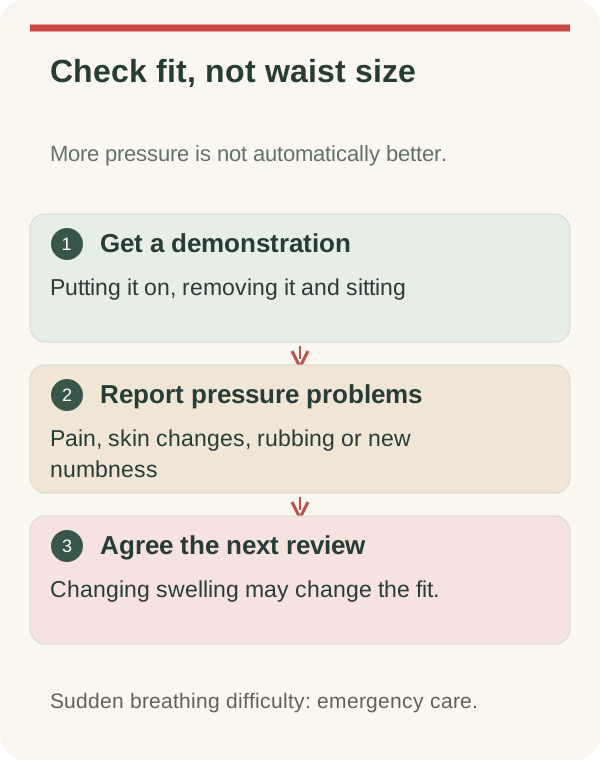
Before leaving the clinic, ask staff to show how to put the garment on, fasten it, adjust it as instructed and remove it safely. Then show them how you would do it so they can check any difficulty. Include the person who will help you if you cannot reach the closures yourself. Ask how the garment should sit around the incision, navel, dressings and any drain tubing. [1][4] Demonstrate ordinary tasks such as sitting, standing and using the bathroom. Tell staff about rubbing, folding, concentrated pressure or difficulty managing the fastening. Ask who you should contact if the fit changes after you return to your hotel. A size label or a seller’s measurement chart cannot assess your postoperative condition. Do not force a smaller size because it is described as the next stage of recovery online.
What symptoms mean the fit needs review?
Pain from a pressure point, skin irritation, blistering, increasing numbness or a garment that restricts comfortable breathing deserves prompt clinical advice. Ask in advance what to do with the garment while obtaining that advice. Do not keep tightening it to treat a new swelling or assume painful compression is necessary for a good result. The evidence does not support a universal pressure target for every patient. [3][9] Sudden breathing difficulty, chest or upper-back pain or fainting requires emergency medical care. Do not assume the only explanation is that the garment is tight, and do not delay help to send a photograph to a seller. A serious postoperative problem can occur with or without a garment. Seek care based on the symptom, not on whether changing clothing seems to improve it temporarily. [5] General support-garment safety information supports reporting these pressure-related concerns; it does not set a postoperative wearing protocol. [9]
Swelling does not tell you how much to tighten
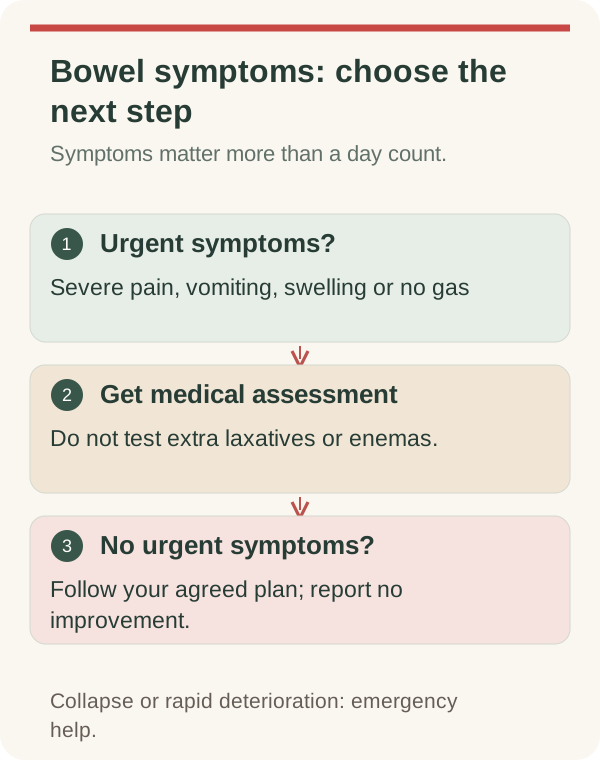
Postoperative swelling can change the way clothing feels. Ask your team when the fit should be checked and whether adjustment or replacement is appropriate. New, increasing or uneven swelling needs clinical review rather than a self-directed decision to add pressure. A garment cannot tell you whether a swelling is ordinary recovery, fluid collection, bleeding or another problem. [1][2] Make a short observation note if the team requests it: where the garment presses, when the change started and whether pain or skin changes are present. Avoid repeatedly compressing the area to test it. A photo can show a visible crease but not establish safe pressure or the condition of deeper tissues. If the clinician wants an examination, do not substitute a video fitting with a retailer for that assessment.
Foam, boards, waist trainers and extra layers are separate decisions
Ask before placing foam, a board, another binder or a waist trainer beneath or over the prescribed garment. These additions can change how pressure is distributed and may interact with dressings or drains. A product bundle or a recovery influencer’s routine does not establish that the combination is appropriate after your operation. Do not assume more layers mean more support or better healing. [3] If a massage provider or shop suggests a change, ask them to explain it and have the surgical team confirm the plan. Keep the agreed instructions together so you are not switching between competing routines. Ask who is responsible for fitting any approved addition and what symptoms should lead to review. This is especially important if sensation is altered and discomfort alone may not tell you that a seam or edge is causing trouble.
A corset operation is not the same as a postoperative corset
Some clinics use the word “corset” in the name of an abdominal operation. That describes the clinic’s surgical offering, not a universal garment prescription. Ask the surgeon to separate the planned tissue repair from the external clothing used afterward. The fact that a service has a particular name does not tell you which garment to buy or how tightly to wear it. [6] At consultation, ask for two distinct explanations: what will be done during surgery, and what support or compression will be used during recovery. If the garment is described as essential, ask how the team will handle poor fit, skin irritation or inability to tolerate it. A clear response should identify a route to reassessment rather than imply that you must endure any symptom to protect the cosmetic result.
What schedule applies to daytime, sleep and bathroom visits?
General patient leaflets describe different wearing periods. The NHS overview mentions around six weeks, while Chelsea and Westminster describes a support garment for roughly four to six weeks when advised. Those are service-level examples, not a schedule this article prescribes. Ask for your own instructions covering sleep, washing, bathroom visits and periods without the garment. [2][7] Do not compensate for time out of a garment by tightening it afterward. Ask what to do if a closure breaks, it becomes wet or you cannot put it back on safely. If instructions are unclear or conflict with a product label, contact the team before improvising. The written plan should say when fit and continued use will be reviewed, rather than leaving you to decide from an online photograph or the date on a garment package.
Cleaning and drying should be part of the practical plan
Check the garment’s care instructions and ask the clinic how those instructions fit your postoperative schedule. Some people need a second approved garment while one is being cleaned, but do not assume a spare in a different style or size is equivalent. Arrange laundry and drying access at your accommodation before surgery. Keep any purchase decision tied to the actual product your team recommends. [4] Ask what to do if the garment is soiled by wound fluid or if a dressing leaks onto it. Cleaning the fabric does not assess the reason for new drainage. Do not use heat, strong cleaning products or other measures outside the product instructions in an attempt to speed drying or make the garment feel tighter. If the care label and clinical plan cannot both be followed, ask for an alternative that the team approves.
Changing sensation makes checking more important
Tummy tuck surgery can leave altered sensation in the treated area. Do not rely only on pain as feedback about how a garment is sitting. Ask the team how and when to inspect the skin, whether you need help to see all areas and which changes should be reported. Follow the wound-care instructions rather than repeatedly removing dressings just to look beneath them. [2] Mention persistent folds, rubbing edges or difficulty reaching a fastener. Explain whether the problem occurs while seated, walking or lying down, because a garment can feel different in each position. A companion can help describe what is visible, but should not diagnose a skin change or undertake a new treatment. The aim is early communication and a workable fitting plan, not constant checking that leaves you more anxious and the wound unnecessarily disturbed.
The garment does not replace clot prevention or exercise advice
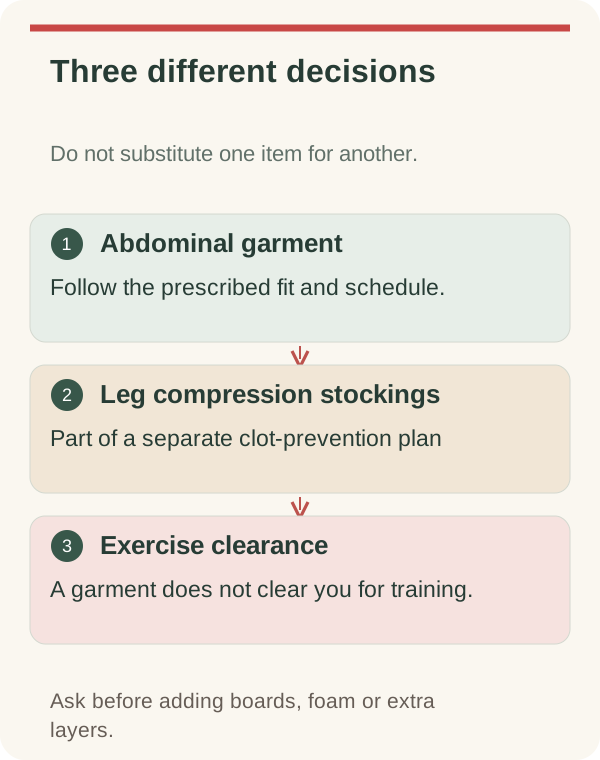
An abdominal garment is not the same device as compression stockings prescribed for the legs, and neither replaces the rest of an individualized clot-prevention plan. Follow the specific instructions for each item and for any prescribed medicine. Ask which short walks or other movements are appropriate. Do not remain immobile merely because you feel securely supported. [1][8] Equally, do not wear a tighter garment to return to exercise before clearance. Discuss running, weights and abdominal training separately with the surgeon. New one-sided leg pain or swelling needs urgent assessment; sudden breathing difficulty, chest pain or fainting needs emergency care. These symptoms are not a routine fitting problem. Keep the distinction clear when explaining a concern to a companion or a clinic contact. [5][8]
Decide how use will be reduced or stopped
Ask what review determines whether to continue, reduce or stop the garment. A calendar estimate may change if your operation or recovery differs from the original plan. Describe difficulties with sleep, skin irritation, toileting or dressing, and ask the team to address them rather than quietly abandoning or escalating use. Neither continued wear forever nor abrupt self-directed changes are implied by this article. [1] If you will return home before that review, confirm who will make the decision and whether it requires examination. Keep the product details and written instructions with your operation summary. Tell a local clinician what was prescribed and why. A clear handover is more useful than asking an online group to judge whether your abdomen looks ready to stop compression.
A listed clinic to ask about surgical and garment plans
VeryGood Plastic Surgery’s body-contouring page lists corset abdominoplasty. That makes it a relevant listed clinic for a discussion separating the proposed operation from the postoperative garment. Review the official service information and the atlas profile before contacting the clinic. The procedure listing does not independently verify a particular garment brand, pressure level or fitting service. [6] Ask who chooses the garment, when it is fitted, how problems are reviewed and which costs are included. Request written instructions in a language you understand and confirm who will answer after-hours concerns. If you are comparing clinics, compare these practical answers alongside the surgeon, operation and follow-up plan. Do not choose solely on an attractive garment package or an unsupported claim that more compression guarantees a better contour.
Quick questions patients often ask
Is tighter better? No universal rule supports that approach; ask for a fit review. Can I buy a smaller garment when swelling changes? Have the team assess the change and approve the size. Does swelling without the garment mean I have damaged the result? That observation alone cannot establish the cause or the long-term result. Report concerning changes rather than diagnosing them. Can I stop because research is uncertain? Discuss the evidence with your treating team before changing a prescribed plan. [1][3] Before leaving the fitting appointment, confirm four things: the exact product, how to use it, what should trigger review and when the plan will be reassessed. Keep those answers available during your stay in Korea and after you return home. If symptoms are urgent, seek care first rather than waiting for a routine garment appointment.
Explore the profiles mentioned in this guide
Use these source-linked profiles to prepare questions and confirm your individual plan directly.
Continue with the related guides
Put this information into your consultation
Use the consultation checklist and budget worksheet to record your questions. Explore tummy tuck clinics in South Korea and doctor profiles before asking a clinic about your individual plan.
Sources & further reading
Source links support the topic or the attributed provider details. Practical preparation prompts are editorial guidance. Checked 5 November 2026
- American Society of Plastic Surgeons: tummy tuck recovery ↗
- NHS: tummy tuck ↗
- Arkoubi, 2024: systematic review of compression after abdominoplasty ↗
- University of Washington Medicine: panniculectomy or abdominoplasty, October 2025 ↗
- NHS: pulmonary embolism, reviewed October 2026 ↗
- VeryGood Plastic Surgery: published body-contouring services ↗
- Chelsea and Westminster Hospital: abdominoplasty surgery ↗
- NHS: deep vein thrombosis ↗
- University of Alberta: support and compression garment safety (general guidance, not a tummy tuck protocol) ↗