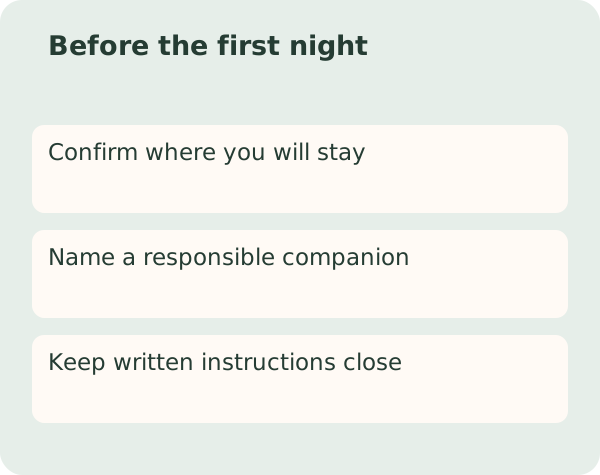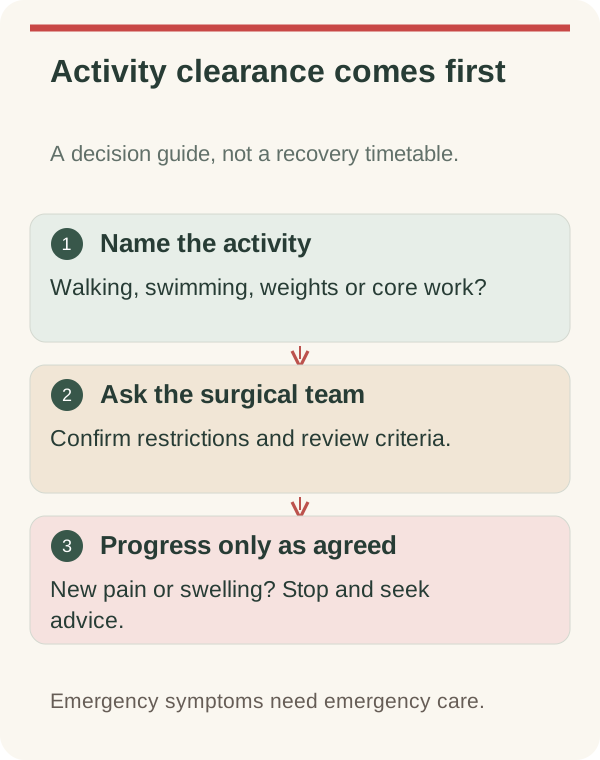
- Get separate clearance for walking, gym work, swimming and core exercise.
- Include childcare, work and luggage in the activity discussion.
- Stop new symptoms and use urgent or emergency care when needed.
Start with the operation you had, not someone else’s timetable
A tummy tuck can involve skin removal, repair of the abdominal supporting tissues and additional liposuction. A mini procedure, a full abdominoplasty and a wider body-contouring operation do not necessarily create the same restrictions. Ask for the actual operation name and whether the plan changed during surgery. If you also had another procedure, the most restrictive part of the combined recovery may matter to the activity you want to resume. [1][2] Before discussing a workout, explain your normal routine in concrete terms: the equipment, usual loads, running distance, class movements and any competition date. “I exercise a little” can mean a relaxed walk or a strenuous class. Take a short written list to the review. The aim is to agree what is allowed now, what remains restricted and what needs another examination, rather than obtain a broad statement that you can be active.
How long should you wait? Use time ranges for planning, not clearance
Published advice commonly describes several weeks away from strenuous activity. The NHS overview mentions approximately four to six weeks off work and exercise, while Hull’s discharge advice recommends avoiding strenuous activity and heavy lifting for at least six weeks. These are general service instructions, not a personal countdown. Wound problems, a more extensive operation or another medical issue can extend restrictions. [2][3] Use such ranges to arrange help and keep plans flexible. Ask the surgeon what must be checked before each activity returns, who will make that decision and whether you need an in-person review. A preoperative estimate should be revisited after the operation. If two professionals give different dates, ask the treating surgical team to resolve the difference in writing. Do not choose the shorter estimate because an event, holiday or gym subscription is approaching.
Walking is early recovery movement, not a fitness test
Your team will usually encourage movement appropriate to your condition rather than prolonged immobility. Chelsea and Westminster’s abdominoplasty advice describes short walks early in recovery, with posture instructions intended to avoid excessive pull on the abdomen. Ask a nurse or physiotherapist to show you the movement and posture suitable for you instead of copying a video. [4] Clarify whether you need assistance, which route is manageable and what to do if you become dizzy or unusually tired. A hotel corridor may be more practical than an outdoor sightseeing route with stairs. Do not set a step target as proof that recovery is going well. Tell the team about difficulties getting out of bed or reaching the bathroom. Increasing movement safely is different from using a long walk to replace a missed workout.
Separate low-impact activity, running and resistance training
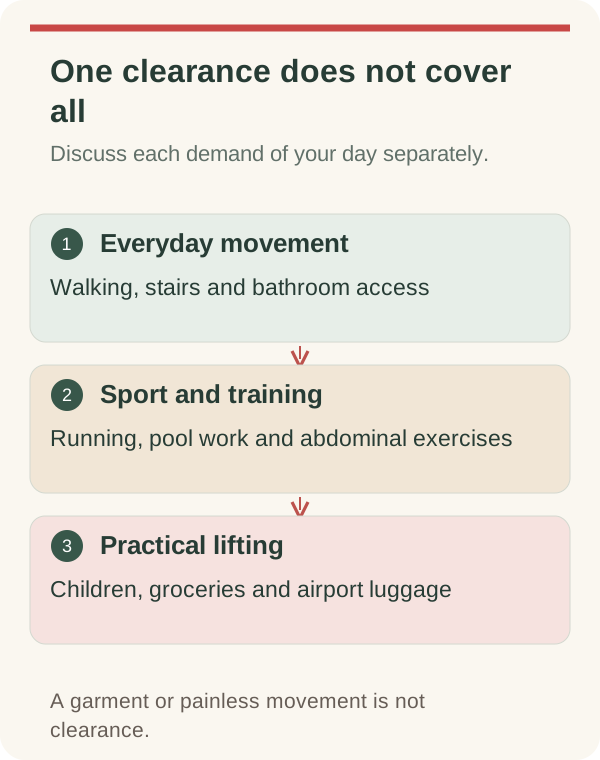
Ask about each category rather than requesting one “exercise clearance.” Stationary cycling, outdoor cycling, running, a fitness class and weight training have different movements and practical demands. Mounting equipment, getting up from the floor or controlling a sudden loss of balance can matter even when the exercise is described as low impact. These are details to discuss, not a list of activities this article authorizes. [1][4] For the first permitted session, agree how much to do, how to stop and when to check back. Do not restore all preoperative exercises at once because one activity has been approved. Explain the total physical load of your day, including commuting, work and care responsibilities. A clinician can help decide whether adding training is appropriate on top of those demands. Keep the first return flexible enough to shorten or postpone it without pressure.
Core work, Pilates and yoga need specific questions
“Core exercise” is not one movement. Planks, sit-ups, loaded carries, twists, backbends, floor transitions and breath-holding during effort may place different demands on the operated area. If abdominal-wall repair was part of your surgery, ask the surgeon to identify the restrictions that follow from it. Do not assume that a postpartum exercise programme or advice for a hernia operation applies to your tummy tuck. [1][2] Show a clinician the actual class or exercise description. Ask whether any modifications are suitable and whether a physiotherapist should supervise the return. A trainer can adapt a session within medical restrictions but should not replace assessment of a painful bulge or new swelling. Feeling fit before surgery does not answer whether healing tissues are ready. Equally, delaying a particular movement does not mean you must abandon all approved everyday activity.
Swimming requires both wound and exercise clearance
Ask two questions before returning to a pool: may the wound be submerged, and may you perform the swimming activity? These are not interchangeable. Hull’s advice ties return to swimming and other exercise to healed scars and discussion at follow-up. A waterproof dressing is not permission to swim, and the ability to walk comfortably does not settle the question. [3] Discuss how you would enter and leave the pool, whether a ladder or slippery floor creates a problem and how you would manage the changing area. If a wound opens, drains, becomes more painful or otherwise changes after clearance, ask whether the plan remains valid. Do not treat a hotel pool booking as a reason to test it. The separate guide on showering, bathing and swimming covers water exposure in more detail.
Luggage, children and housework count as physical effort
A gym restriction can be undermined by carrying a suitcase, lifting a child or moving groceries. Hull specifically includes lifting children in its heavy-lifting advice. Ask your team what limits apply to the tasks you cannot easily avoid and how long you need practical help. Avoid inventing a kilogram limit from someone else’s discharge sheet. [3] For a Korea trip, arrange who handles the suitcase at the hotel, in a taxi and at the airport. A bag with wheels still needs lifting onto surfaces or over steps. At home, discuss school runs, pet care, laundry and work duties before your helper leaves. If support falls through, contact the team about safer arrangements rather than replacing the missing help with an unapproved activity. A written task list can make requests for assistance more specific.
Stop for new symptoms, and distinguish urgent from emergency care
Stop an activity that causes new or increasing abdominal pain, unusual swelling, bleeding or wound changes, and contact the surgical team promptly. Describe what you did and how the symptom changed. Do not repeat the movement to test whether it happens again or simply tighten a garment and continue. A photograph may help a clinician but cannot replace an examination when one is needed. [1][3] New pain or swelling in one leg needs urgent assessment for a possible clot. Sudden breathing difficulty, chest or upper-back pain, or fainting needs emergency care. Do not label these as being out of condition. Use the local emergency service and do not drive yourself when seriously unwell. These symptoms can have several causes, and this guide cannot diagnose them. Do not wait for all warning signs to appear together. [5][6]
Give your trainer a useful handover
A practical handover states the procedure, remaining restrictions, currently permitted activities and when the next clinical review is due. You do not need to share more medical details with a trainer than are useful to support the agreed plan. Ask the surgical team whether a physiotherapy referral would help, especially if you are unsure how to translate restrictions into daily movement. Tell the trainer that a visible scar and a comfortable warm-up are not substitutes for surgical clearance. Agree that unexpected pain or swelling ends the session and triggers the appropriate clinical advice. Pause automatic training progression in apps if it conflicts with your plan. A tracking device can record a workout, but it cannot assess tissue healing or safely decide that you are ready to increase intensity.
Build a return plan that can change
At the review, write down the activity permitted, the starting level recommended by the team, what would make you stop and how the next increase will be decided. Ask whether the plan includes work-related exertion as well as sport. Keep the explanation in language you understand and confirm ambiguous terms before leaving. This is a planning record, not a self-directed rehabilitation prescription. [1] If a symptom interrupts progress, report it and revise the plan instead of compensating with a harder session later. Bring observations that are useful: activity, duration, symptom, when it started and whether it continues at rest. Avoid interpreting every fluctuation in appearance as a training failure. Recovery decisions should focus on function and clinical assessment, not the pressure to reach a particular photograph or waist measurement by a certain date.
Returning home from Korea does not end exercise follow-up
Before leaving Korea, confirm who can answer activity questions after you return and who can examine you locally if necessary. Ask for a copy of the operation summary and current restrictions. An online conversation can clarify a plan, but it cannot always assess a wound, a new bulge or leg swelling. Overseas surgery planning should include follow-up arrangements and the possibility of needing local care. [8] Explain the exercise you hope to resume after arrival rather than only asking whether you can fly. Clearance to travel is not clearance to train. Account for the physical work of the journey and allow your planned recovery to remain flexible. If a new symptom appears, follow the appropriate care pathway before the next workout; do not wait until the surgeon’s overseas office opens when urgent help is needed.
A listed clinic to discuss your activity plan
VeryGood Plastic Surgery is a relevant consultation option in this atlas because its published body-contouring service includes corset abdominoplasty. That service listing is a reason to ask operation-specific recovery questions, not proof that the clinic provides sports rehabilitation or that it is the right choice for you. Review its official service page and the linked atlas profile before requesting a consultation. [7] Ask which repair is being proposed, who will assess your return to lifting and core work, and how advice will be provided after you leave Korea. If you need a physiotherapist, ask how that will be arranged rather than assuming it is included. Confirm the operating surgeon, follow-up appointments and any costs of additional assessments directly. The useful comparison is the clarity of your individual plan, not a promise of the fastest return to exercise.
Quick questions patients often ask
Can I go back when I have no pain? Not on that basis alone. Ask whether the activity is cleared for the operation and healing stage. Can a garment make an early workout safe? A garment is not activity clearance. May I do only upper-body weights? Describe the exact exercise because positioning, bracing and lifting equipment still matter. Is yoga automatically gentle? Class labels do not describe every movement. [1][4] What should I bring to the next review? Your normal training list, the tasks you need to manage at home, current symptoms and the restrictions you were given. Ask the clinician to finish the discussion with four clear answers: what you may do now, what you must still avoid, what symptoms change the plan and when the decision will be reviewed.
Explore the profiles mentioned in this guide
Use these source-linked profiles to prepare questions and confirm your individual plan directly.
Continue with the related guides
Put this information into your consultation
Use the consultation checklist and budget worksheet to record your questions. Explore tummy tuck clinics in South Korea and doctor profiles before asking a clinic about your individual plan.
Sources & further reading
Source links support the topic or the attributed provider details. Practical preparation prompts are editorial guidance. Checked 5 November 2026
- American Society of Plastic Surgeons: tummy tuck recovery ↗
- NHS: tummy tuck ↗
- Hull University Teaching Hospitals: abdominoplasty discharge advice, updated April 2026 ↗
- Chelsea and Westminster Hospital: abdominoplasty surgery ↗
- NHS: deep vein thrombosis ↗
- NHS: pulmonary embolism, reviewed October 2026 ↗
- VeryGood Plastic Surgery: published body-contouring services ↗
- NHS: cosmetic surgery abroad ↗