- Plan for bowel care alongside pain treatment.
- Do not combine laxatives, enemas or supplements without advice.
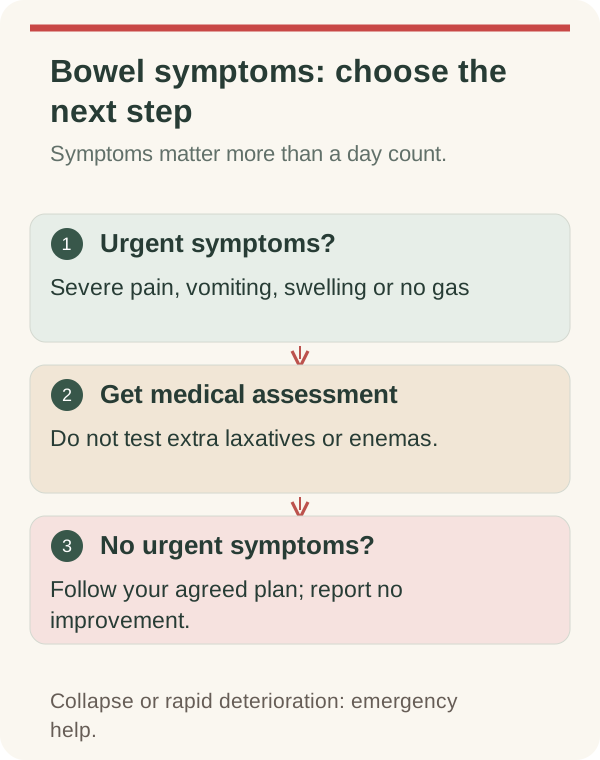
- Severe pain, repeated vomiting, marked swelling or inability to pass gas needs assessment.
Compare symptoms with your usual bowel pattern
Constipation is not defined only by missing a bowel movement on one particular day. Hard stools, difficulty passing them, straining or a feeling of incomplete emptying can matter, as can a change from your usual pattern. Tell the clinician what was normal for you before the operation and when the change began. This is more informative than comparing your recovery with a stranger’s online diary. [1][2] Record your last bowel movement, whether you are passing gas and whether you have pain, nausea or vomiting. You do not need a perfect chart before seeking advice. The purpose of a brief record is to help the team decide what to assess, not let you diagnose yourself. Ask before surgery how soon to contact them if the agreed plan is not working; do not borrow an arbitrary waiting period from a different patient.
Why surgery can disrupt bowel habits
Postoperative pain medicines, especially opioids, can contribute to constipation. Moving less and eating or drinking differently may add to the problem. A tummy tuck trip also changes your routine, meals and access to a familiar bathroom. These are possible contributors, not evidence that every new abdominal symptom is harmless. [1][2] Tell the team if you already use bowel medicines, have a digestive condition or have had previous abdominal operations. Bring a list of regular prescriptions, over-the-counter products and supplements. Ask whether the pain plan includes prevention or treatment of constipation and who will adjust it if necessary. Do not stop a prescribed medicine on your own because you suspect it is responsible. A coordinated change is safer than alternating between uncontrolled pain and unplanned remedies.
Know when to seek urgent assessment
Intestinal obstruction can cause abdominal pain, vomiting, swelling and inability to pass gas or stool. A complete obstruction is a medical emergency. Symptoms after an operation cannot be distinguished reliably through a self-test or photograph. Severe or increasing pain, repeated vomiting, marked distension or inability to pass gas warrants urgent medical assessment, particularly when symptoms occur together. Do not wait for every feature. [3] Contact the surgical team immediately for a clear route to assessment. If you cannot promptly obtain the needed evaluation, use an urgent or emergency medical service where you are. Collapse, severe breathing difficulty or rapid deterioration needs emergency help. Do not drive yourself when seriously unwell. Avoid taking extra laxatives, forcing a large meal or trying an enema to test whether the problem will resolve. Let the assessing clinician decide what treatment is appropriate.
Constipation, bloating and postoperative ileus are not interchangeable
A bloated feeling does not tell you whether stool is difficult to pass, the bowel is moving slowly or there is a blockage. MedlinePlus distinguishes mechanical obstruction from impaired bowel movement, including ileus. Recent surgery and symptoms are part of a clinician’s assessment; the name cannot be established by the number of days since your last stool. [3] Passing a small amount of stool does not explain away other concerning symptoms. Likewise, a photograph of a swollen abdomen cannot establish that the bowel is functioning normally. Describe what is happening rather than announcing a diagnosis. “My abdomen is becoming more swollen and I have vomited” is more useful than “I think I just have gas.” If symptoms change after earlier reassurance, report the change and ask whether another assessment is needed.
Make a written bowel plan before you leave the clinic
Ask whether a bowel medicine has been prescribed, why it was chosen, how to use it and when to call if it does not help. Confirm the plan alongside your pain medicines so the two instructions do not conflict. Have the clinician or pharmacist explain any limits related to kidney, heart or bowel conditions. A general article cannot choose the safest product for your situation. [4] The written plan should identify the medicine by active ingredient as well as brand, the prescriber’s directions and the contact for problems. Ask what to do if you miss a dose, vomit after taking it or develop diarrhoea. Do not invent answers from the fact that another product has similar packaging. Keep the plan with your discharge information and make sure the person helping you understands when symptoms require medical attention rather than another dose.
Food and fluid advice should fit your recovery
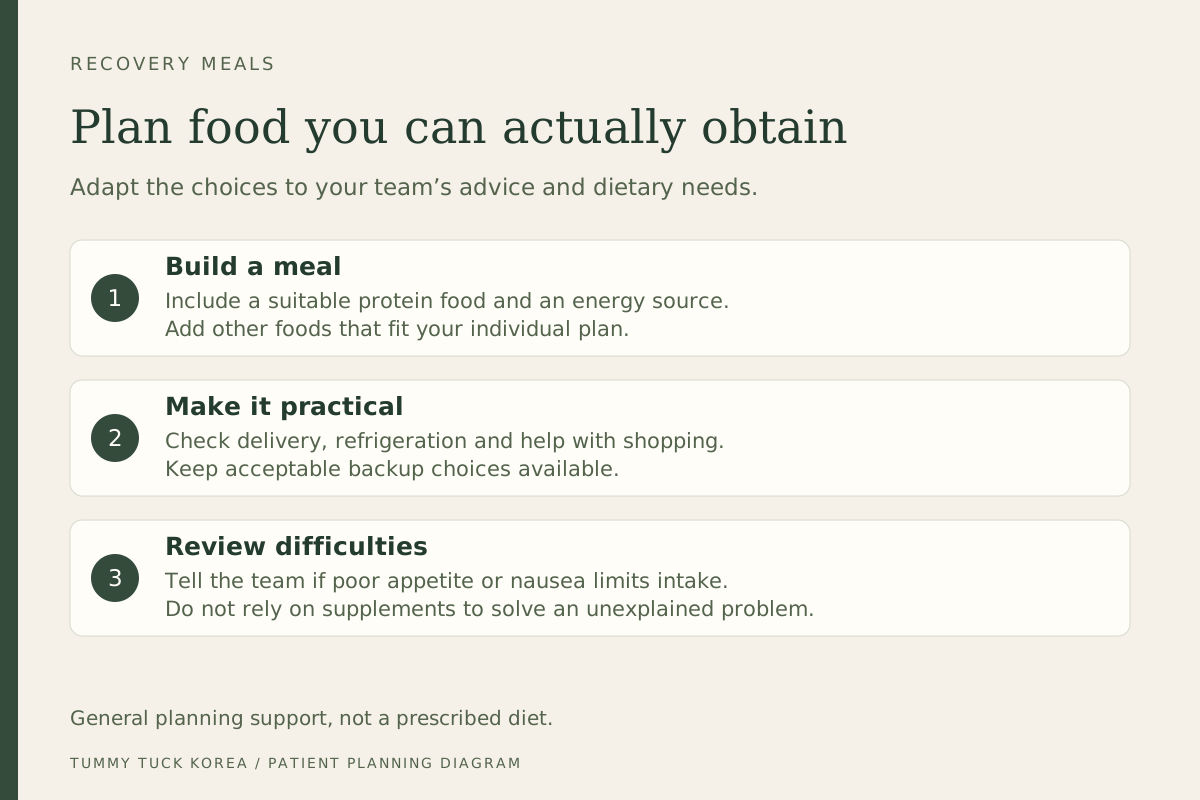
For uncomplicated constipation, clinicians may discuss fibre-containing foods and adequate fluids. That general advice must be adapted if you are nauseated, have another condition or have been told to restrict fluids. Ask what your team recommends and how to respond if eating or drinking becomes difficult. Do not force extra fibre or fluid as a treatment for symptoms that need assessment. [5] Plan meals you can obtain without heavy carrying or complicated preparation. Ask your companion to keep drinks accessible and to help with shopping if needed. If you have dietary requirements, arrange practical options before the operation. No single juice, tea or food is a guaranteed cure. A balanced recovery diet and a bowel plan are related, but the need for nutrition should not be reduced to a last-minute search for one supposedly powerful remedy.
Gentle movement must stay within your surgical restrictions
Movement may help bowel habits, but postoperative advice depends on your operation and mobility. Ask which short walks and ordinary position changes are allowed. Treat that as recovery movement, not permission for abdominal exercises or vigorous walking to force a bowel movement. If getting to the bathroom is difficult, ask for help and reassessment of the practical plan. [1] Do not use abdominal massage simply because a general constipation leaflet mentions it. A recently operated abdomen needs procedure-specific advice. Similarly, a social-media demonstration of stretching or twisting is not an instruction for your recovery. Keep the goals separate: comfortable, safe mobility; adequate symptom control; and a clinician-approved bowel plan. If pain prevents the permitted movement, tell the team instead of abandoning pain treatment without advice.
Understand laxative categories without choosing a regimen yourself
Different laxatives work in different ways. Some increase stool bulk, others draw water into the bowel, soften stool or stimulate bowel movement. They are not interchangeable, and the right choice can depend on the cause of symptoms and other medicines. The NHS specifically advises checking with a clinician or pharmacist when taking opioid painkillers or when certain health conditions are present. [4] Ask the pharmacist to explain the product you were actually prescribed, rather than selecting a category from this list. This guide does not provide doses, combinations or a sequence of medicines to try. Do not add an enema, suppository or a second oral product without checking. If the plan is not working, report the symptoms and what you have taken. Taking more because a product has not worked immediately can create another problem rather than solve the first.
A Korean brand and your home brand may differ
Keep the original packaging and request the active ingredient in a language you can show to a pharmacist at home. Products with familiar names may have different formulations, strengths or additional ingredients across countries. A photo of the label can help you remember it, but ask a professional to confirm equivalence before substituting or combining medicines. Bring your complete medicine list to the discussion, including pain medicines, supplements and anything you purchased yourself. Mention allergies and any previous reaction to bowel medicines. If you receive advice from both a Korean clinic and a home-country clinician, ask who is coordinating the change so you do not follow two separate plans at once. Clear communication is especially useful when instructions are translated or passed through a companion.
Make bathroom care possible without straining or falls
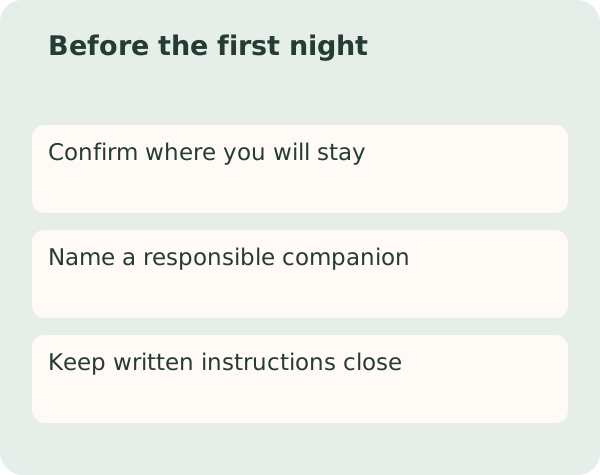
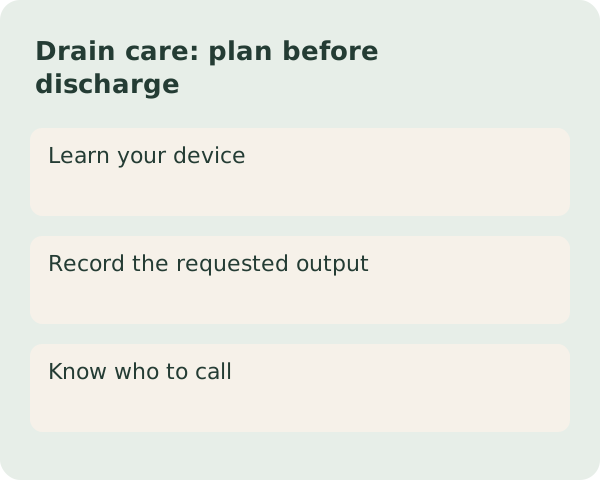
Before discharge, ask how to sit, stand and manage clothing, a garment or a drain during a toilet visit. Choose accommodation with straightforward bathroom access and arrange assistance if you need it. These are practical questions worth rehearsing with staff, particularly if you cannot easily reach closures or stand up comfortably. Do not wait until you are alone and uncomfortable to discover the difficulty. Avoid prolonged forceful straining to meet a deadline. Tell the clinical team if passing stool hurts or if you cannot use the toilet comfortably. Ask whether a positioning aid is suitable for you rather than balancing on improvised furniture. Privacy matters, but a companion should know when you need help. This page does not replace instructions for drains or wounds; keep those instructions accessible and do not disconnect equipment merely to make a bathroom visit easier.
What to report when you call
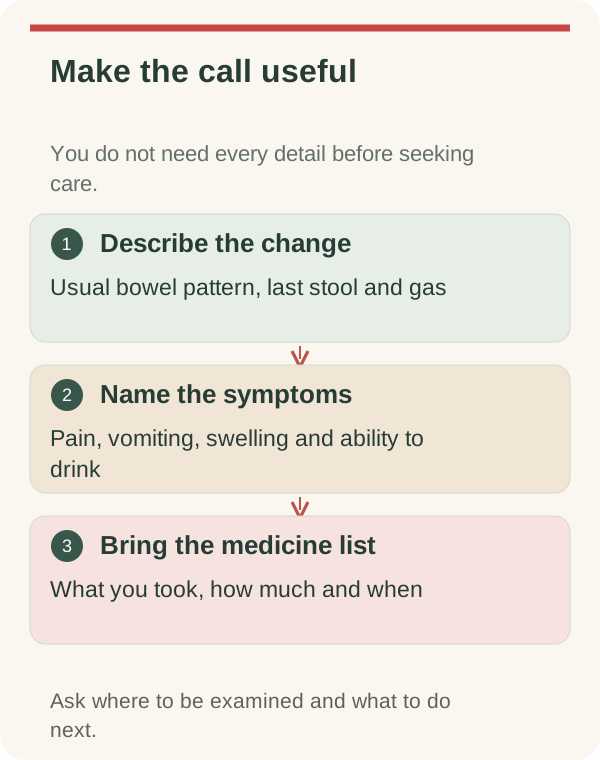
A concise report includes the operation and date, your usual bowel pattern, the last stool, whether gas is passing, and any pain, vomiting, fever or increasing swelling. List the medicines and remedies you have used, including when you last took them. Tell the team whether you can drink and where you are staying. This helps them choose the next step, but you should not delay urgent help to collect every detail. [2][3] Ask directly whether you need examination and where that should happen. If a phone plan is given, confirm what change should prompt another call or emergency assessment. A message saying “constipated” may not communicate worsening pain or repeated vomiting, so state those symptoms explicitly. If you feel too unwell to explain, have a companion help while you seek care.
Before flying home, resolve the follow-up plan
Do not use a departure date as the deadline to force a bowel movement or try a stronger combination of products. Tell the surgeon about unresolved symptoms before travel and ask whether assessment or a change in the travel plan is necessary. Bring the medicine list and operation summary home. Overseas surgery requires a clear route for follow-up rather than reliance on informal messaging alone. [7] Ask which clinician can assess ongoing problems after your return and how the Korean team will share relevant records. If symptoms worsen during travel or after arrival, seek care where you are rather than waiting for a remote response across time zones. The bowel-care guide is separate from flight clearance and clot-prevention advice. Completing one checklist does not substitute for the other.
A listed clinic for a preoperative bowel-care discussion
VeryGood Plastic Surgery’s published body-contouring services include abdominoplasty, making it a relevant listed option for a consultation about the proposed operation and recovery arrangements. Review its official service page and atlas profile. The listing does not establish a specialist bowel service or promise that the clinic manages every abdominal complication itself. [6] When comparing a proposal, ask who reviews medicines, who answers postoperative bowel questions and where urgent abdominal symptoms are assessed. Request a written plan for pain treatment and constipation before you travel. Confirm the named surgeon and current aftercare arrangements directly. A useful consultation explains the limits of remote advice and the route to local examination; it should not dismiss severe symptoms with a generic recommendation to drink more water.
Quick questions patients often ask
Must I pass stool every day? Normal patterns differ; a change from your usual pattern and associated symptoms matter. Should I stop pain medicines? Ask the prescriber to review the plan rather than stopping them yourself. Is a herbal or “detox” tea safer? Treat it as another product to check, not an automatically harmless option. May I wait because constipation is common after surgery? Not if you have severe or worsening pain, repeated vomiting, marked swelling or inability to pass gas. [1][2][3] For a routine follow-up, bring the medicine packaging and a short symptom record. The most useful outcome is a clear next step, not a diagnosis you have made from the calendar. Ask when the plan should help, what to do if it does not and which symptoms mean you should seek care sooner.
Explore the profiles mentioned in this guide
Use these source-linked profiles to prepare questions and confirm your individual plan directly.
Continue with the related guides
Put this information into your consultation
Use the consultation checklist and budget worksheet to record your questions. Explore tummy tuck clinics in South Korea and doctor profiles before asking a clinic about your individual plan.
Sources & further reading
Source links support the topic or the attributed provider details. Practical preparation prompts are editorial guidance. Checked 5 November 2026