- Scar maturation varies; a calendar or photograph cannot predict your final result.
- Seek assessment for troublesome scars and prompt care for wound warning signs.
- Choose a consultation by its explanation and follow-up plan, with realistic treatment goals.
What does scar maturation actually mean?
Wound closure and scar maturation are different milestones. A closed incision means the surface has healed; it does not mean the scar has reached its lasting appearance. Royal National Orthopaedic Hospital describes scars gradually becoming flatter and less red, while some remain raised, widen or feel less mobile than nearby skin. Dryness, itching, numbness or sensitivity may also occur. These descriptions explain possible changes, not a checklist that establishes normal healing without an examination. [2]
Think about three separate questions: is the skin intact, are symptoms improving, and is the appearance becoming more acceptable? One can improve while another remains troublesome. A pale scar can still bother someone because of its position; a visible scar can be comfortable and acceptable. Explain which issue matters to you. For an international patient, this distinction also helps a coordinator arrange the right appointment instead of automatically offering another cosmetic treatment.
How should you interpret changes over months and years?
Avoid treating a calendar as a pass-or-fail test. An early photograph, a six-month review and a later assessment answer different questions. Your clinician can explain what they are monitoring at each visit and whether more observation is useful. A long maturation period does not mean every concern should be left unexamined until it ends.
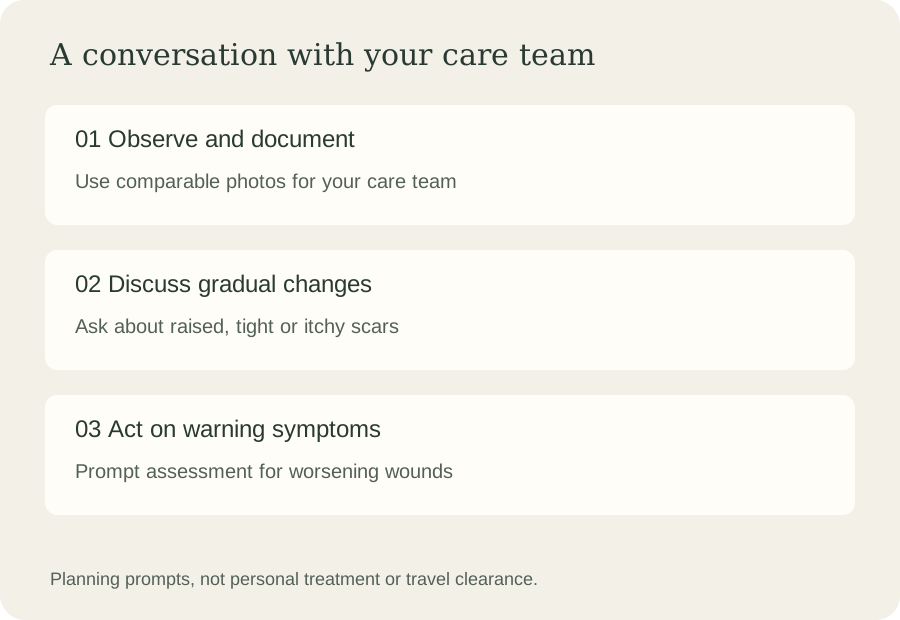
Track the features that concern you with dated, unfiltered photographs taken in similar light and position. Include the whole scar and a closer view of the relevant area, following the clinic’s secure submission instructions. Note symptoms separately: photographs cannot show how a scar feels when clothing touches it or how it affects movement. Ask who will review the images and when an examination is needed. Comparing your own records is more informative for that discussion than comparing your latest photograph with another patient’s selected social-media result. Request the date after surgery for any example a clinic shows you.
Is a raised or dark scar necessarily a keloid?
No. Appearance alone is not enough for you to diagnose the scar or choose a treatment. NHS guidance distinguishes a hypertrophic scar, which is raised but stays within the original wound, from a keloid that grows beyond it. The American Academy of Dermatology similarly describes keloids as growing beyond the injury that triggered them. [1][3]
Colour and height are different observations. Tell the clinician whether the area is flat or raised, whether its boundaries have changed, and whether there is itching, pain or restriction. Avoid using “keloid” as a general name for every visible surgical scar. A diagnosis matters because treatment selection differs by scar type. [4]
Bring photographs or details of previous troublesome scars, including scars from other operations, piercings or injuries. Explain what treatments were used and what happened afterwards. Ask how your own history affects the discussion. Neither your nationality nor the country where surgery was performed can predict your individual scar outcome.
Which changes need prompt medical attention?
Increasing wound pain, redness, warmth, swelling, pus or fever should prompt contact with the surgical team and clinical assessment; these are infection warning signs in NHS abdominoplasty guidance. Do not dismiss them as ordinary maturation or wait for an elective scar appointment. If you feel seriously unwell, seek urgent local care. [5]
An area that opens or drains belongs in a wound-care conversation. Contact your team promptly rather than adding a scar cream or covering the problem with a cosmetic treatment. Scar-care advice intended for healed skin does not establish how to manage an open incision. [2]
When contacting the clinic, state the operation date, where the change is, when it began and whether it is worsening. Say whether you are still in Korea. A message sent across time zones may not receive an immediate response; ask for a local assessment route when care cannot wait. Keep urgent symptom reporting separate from questions about later appearance so the concern is not mistaken for a routine photo update.
What should a long-term scar consultation assess?
Start with a specific goal: less discomfort, less prominence, improved movement, or a clearer explanation of the result. The AAD recommends examination before treatment because health history, scar type and scar age influence the options. [4] Ask the clinician to explain what they see and which part of your concern the proposed treatment could address.
Bring the operation summary, dates of any wound problems, previous treatments, product reactions and your own photographs. If the issue concerns one end of the scar or the navel, identify it explicitly rather than describing the entire abdomen as unchanged. Ask whether the finding concerns the surface scar, its position, or something else that needs assessment.
Leave with a plan you can repeat in your own words: what is being monitored, whether treatment is advised now, what improvement is realistic, and when to review it. Request a written summary if interpretation is needed. You should also understand what would justify an earlier appointment.
What care questions are useful without buying another treatment?
Ask whether the skin is ready for ordinary scar care, what the current aim is, and how the team will judge progress. The NHS advises sun protection for scars, including covering them and using sunscreen. Your clinician can explain suitable protection for your healed skin and circumstances. [1] Do not assume that a postoperative dressing or a purchased scar sheet provides sun protection.
Silicone products and massage have separate practical questions about readiness, application and tolerance. This platform’s silicone and scar-massage guides cover those discussions; this article does not replace the instructions for your own wound or product. RNOH places massage after complete healing. [2]
Make a short list of everything you are applying before the appointment. If several products were started together, explain that rather than guessing which helped or irritated the skin. Ask whether continuing, changing or stopping a particular product fits the plan. Paying for more products is not a way to establish why a scar looks different from your expectation.
When might treatment or revision be discussed?
A consultation can consider observation as well as treatment. Depending on the diagnosed scar, professional options may include topical care, injections, laser treatment or surgery. These are alternatives for selected problems, not a universal sequence that every patient must complete. ASPS explains that scar revision aims to improve a scar’s appearance and cannot erase it. [6]
Ask what the clinician expects to change: height, texture, colour, discomfort or another feature. Request an explanation of side effects, repeat visits, total costs and what happens if the result is disappointing. If a keloid is diagnosed, discuss recurrence: the AAD notes that keloids can return and that clinicians may combine treatments. [7]
A recommendation to wait should include a reason and a review plan. A recommendation to intervene should include why that option fits now. Do not book a flight for revision simply because a package price expires. The separate revision guide covers the broader decision about another operation and its recovery requirements.
How can follow-up continue after leaving South Korea?
Plan beyond the last appointment included in your travel package. Ask who will answer scar questions once you are home, how an interpreter participates, and whether the surgeon or another clinician reviews submitted images. Clarify any limits on remote assessment before you depend on it.
Keep an accessible English-language operation summary, the clinic’s written instructions, treatment names and appointment records. If you seek another opinion, share these with the clinician rather than providing only a cropped photograph. Ask the Korean team whether a local dermatologist or plastic surgeon should examine a particular concern and how the findings can be shared.
For any proposed treatment in Korea, request the expected number of visits and how care would continue between trips. Obtain a written cost breakdown that distinguishes consultation, treatment, aftercare and travel. These are practical planning questions, not a reason to postpone urgent care locally. Your review plan should remain workable even if you decide against another international journey.
Which listed Korean clinic and doctor could you ask?
For a consultation about an abdominal operation and its planned scar, we recommend considering the listed VeryGood Plastic Surgery profile and Dr. Im Young-min as one option to investigate. The clinic’s official English body-contouring page lists corset abdominoplasty, while its official doctor profile lists Dr. Im at VeryGood and includes body contouring. These are clinic-published facts, checked for this guide. [8][9]
This recommendation identifies a relevant consultation starting point; it does not establish specialist scar-revision expertise or predict a result. Ask whether Dr. Im would personally evaluate your concern, whether the clinic accepts patients whose original surgery occurred elsewhere, and who provides longer-term scar care. If a separate scar specialist is needed, request that explanation before booking. Use the linked international clinic website to confirm current services and appointment arrangements. Compare the explanation and follow-up plan with other appropriately qualified options rather than selecting solely from photographs.
Frequently asked questions about lasting tummy tuck scars
Will my scar disappear completely? A tummy tuck leaves a permanent scar. Improvement can mean it becomes less noticeable or more comfortable; it does not mean the operation leaves no mark. ASPS makes the same distinction when describing scar revision. [6]
Is a visible scar after one year proof that surgery failed? No. Scars can continue changing beyond a year. A visible line alone cannot establish whether an operation was performed appropriately. Ask for an assessment of the particular feature troubling you, using your records and goals rather than a deadline from a photograph caption. [1]
Should I wait until maturation is complete before mentioning itching or discomfort? No. Raise symptoms at review, and seek earlier assessment for new or worsening changes. Long-term evolution is not a reason to tolerate a problem without discussing it. Urgent wound warning signs require a different response from an elective appearance question. [2][5]
Can I choose treatment from a photograph? A photograph may help start a consultation, but it does not replace clinical assessment when needed. Ask what can be assessed remotely and what requires an examination before accepting a treatment recommendation. Scar type and your health history matter. [4]
Explore the profiles mentioned in this guide
Use these source-linked profiles to prepare questions and confirm your individual plan directly.
Continue with the related guides
Put this information into your consultation
Use the consultation checklist and budget worksheet to record your questions. Explore tummy tuck clinics in South Korea and doctor profiles before asking a clinic about your individual plan.
Sources & further reading
Source links support the topic or the attributed provider details. Practical preparation prompts are editorial guidance. Checked 25 October 2026
- NHS: scars ↗
- Royal National Orthopaedic Hospital: scar care after surgery ↗
- American Academy of Dermatology: keloid overview ↗
- American Academy of Dermatology: scar diagnosis and treatment ↗
- Chelsea and Westminster Hospital: abdominoplasty surgery ↗
- American Society of Plastic Surgeons: scar revision ↗
- American Academy of Dermatology: keloid treatment ↗
- VeryGood: official body-contouring service ↗
- VeryGood: official Dr. Im Young-min profile ↗