- Arrange dependable meals before your operation.
- Discuss dietary restrictions and supplements with your team.
- Seek advice promptly if you cannot eat or keep fluids down.
Start with a recovery plan, not a list of forbidden foods
After a tummy tuck, the useful question is whether you can reliably eat and drink enough within your own medical plan. General surgical nutrition guidance emphasizes adequate energy, protein, varied foods and fluids. There is no single food that guarantees a fine scar, removes swelling or prevents a complication. A nutritious diet supports recovery; it does not replace wound checks or prescribed treatment. [1][2]
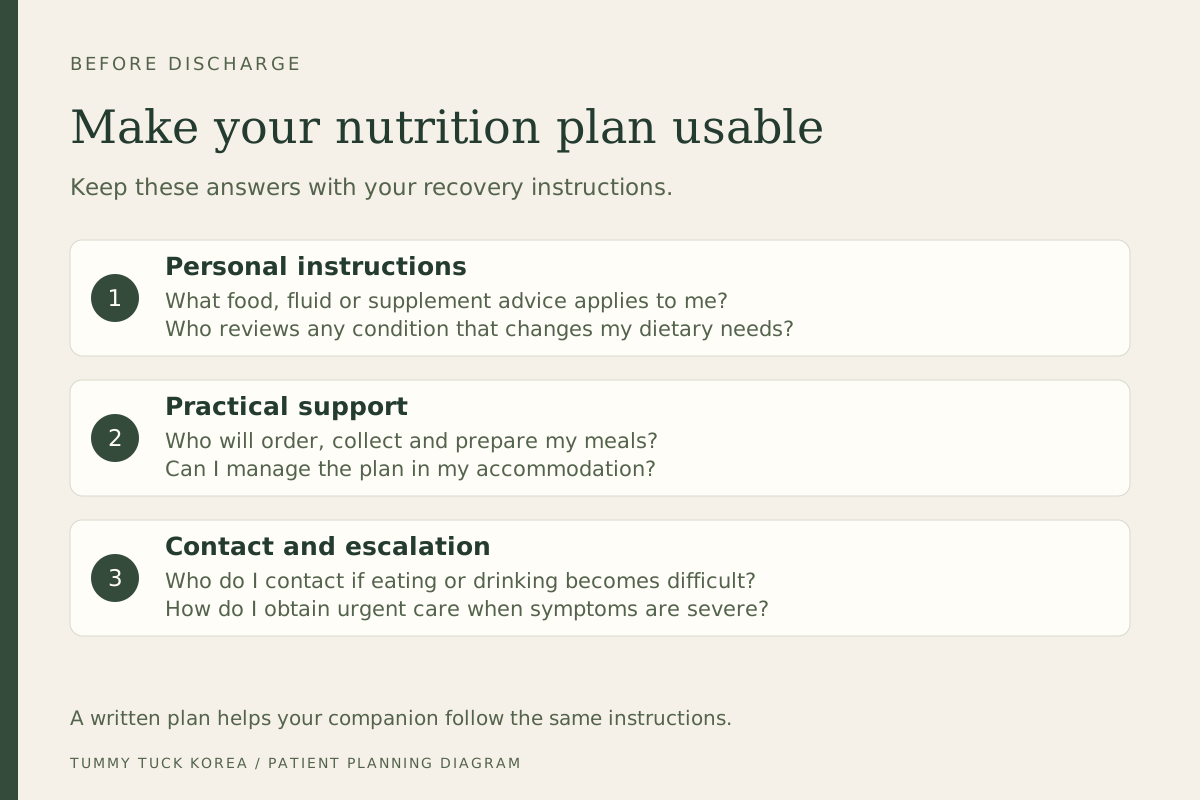
Before travelling, tell your team what an ordinary day of eating looks like. Mention allergies, religious requirements, foods you avoid, recent weight changes and any difficulty buying or preparing meals. A plan that depends on foods you cannot tolerate is not practical. Ask for instructions you can use in your hotel and later at home, including whom to contact if eating becomes difficult. The most helpful preparation is often ordinary: someone to collect groceries, a dependable meal supplier and enough room in your schedule to rest.
Build meals around familiar foods you can obtain in Korea
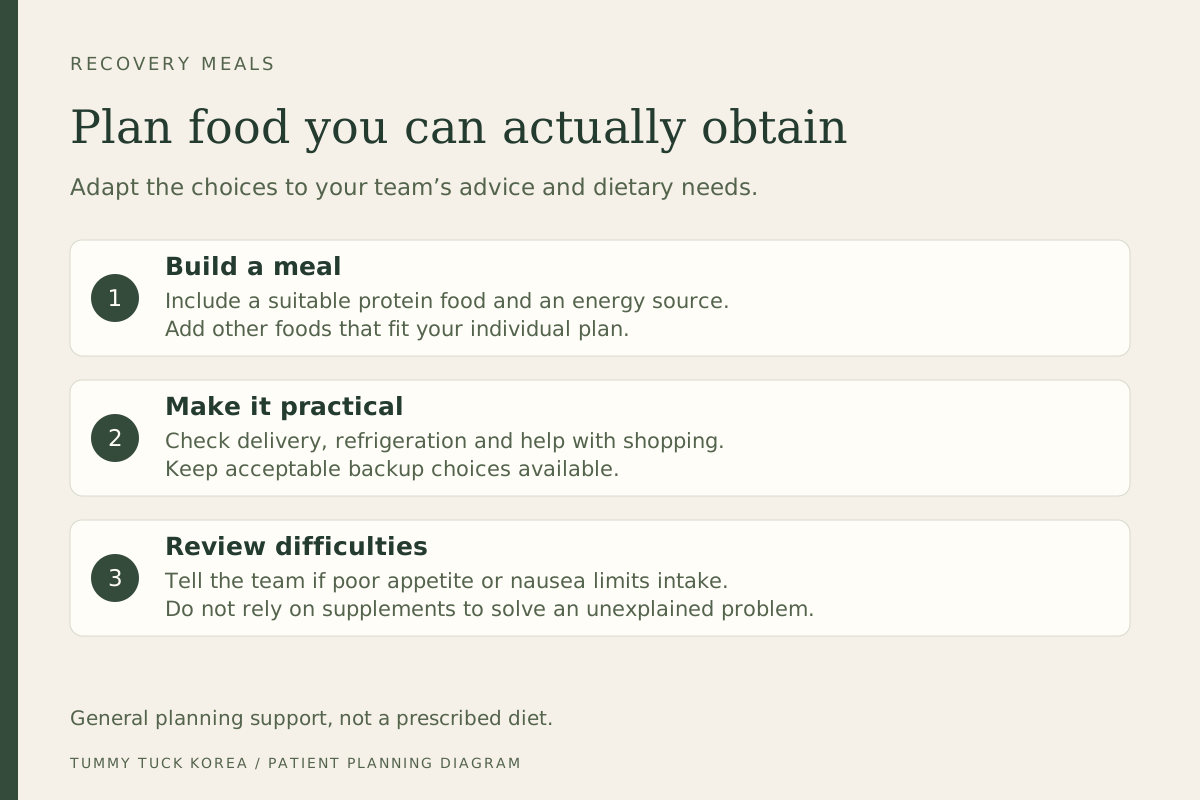
Once your team permits normal eating, a practical meal can combine a protein food, a source of carbohydrate and fruit or vegetables. For example, rice with cooked fish or tofu and vegetables offers a different set of choices from plain broth alone. Eggs, beans, dairy or suitable alternatives can help broaden the options. These are examples for planning, not a prescribed menu or a guarantee that any particular restaurant meal meets your needs. [2]
Try to identify two or three reliable food options before the operation. Check what can be delivered to the actual accommodation address, whether reception accepts deliveries and who will bring the food to your room. Photograph menus or save ordering instructions while you feel well. Avoid relying on a single shop that may close early or on a companion who has not checked how to pay. A small backup supply of familiar, appropriately stored foods makes a delayed delivery less stressful.
Ask about storage and preparation facilities before booking. A room described as a studio may not have the refrigerator or cooking equipment you expect. Your companion should handle heavy shopping bags and tasks your surgical team has restricted. Plan food around your recovery arrangements instead of selecting accommodation only for its proximity to restaurants.
Protein matters, but your target should be individual
Protein supplies material used in tissue repair. Wound-healing guidance suggests including protein foods regularly, while also obtaining enough energy from the rest of your diet. It does not follow that more powder is always better. South Tees specifically advises people with kidney disease or a renal diet to discuss protein intake with their dietitian. [2]
Ask whether your medical history or recent weight loss warrants a dietitian assessment. If you are given a daily target, request examples using foods and serving sizes you recognize. Clarify whether a recommended drink is an addition to meals or intended to replace anything. Bring the product label rather than relying on its marketing name; two drinks advertised for recovery may have very different ingredients.
A useful consultation question is: “What would you change if I could manage only half of my usual meals?” The answer should identify a contact and a next step. It should not leave you to purchase increasingly concentrated products without review. Keep the plan simple enough that your companion can understand it too.
Poor appetite: make the problem visible early
Reduced appetite can accompany pain, nausea, constipation and an unfamiliar environment after surgery. Surgical nutrition advice describes smaller, more frequent eating opportunities as one option when a large meal is difficult. Persistent problems deserve assessment rather than being treated as proof that you should force yourself to eat more. [1]
Tell the team what you actually managed, not simply that you ate “normally.” You could explain that breakfast was a few spoonfuls, lunch was missed and drinks have been difficult since the afternoon. That short description is more useful than a calorie estimate guessed from a delivery photograph. Include vomiting, bowel symptoms and any medicine change in the message.
Do not turn food into a test of willpower. Ask whether nausea relief, pain treatment, bowel care or another part of recovery needs review. If the team changes instructions, keep the updated version with your discharge papers. Tell your companion which advice has changed so that an old printed menu does not override the new plan.
Hydration needs attention as well as food
Thirst, dark urine, urinating less than usual and dizziness can be signs of dehydration. The NHS advises urgent assessment for symptoms such as persistent dizziness on standing or unusually little urine; confusion or difficulty waking can indicate a more serious emergency. Seek local urgent care for severe symptoms, rather than waiting for an online reply from the clinic. [3]
Ask your clinicians what fluid advice applies if you have a medical restriction. Do not copy an internet litre target over a plan for kidney or heart disease. Keep suitable drinks within comfortable reach and arrange help refilling them. If you are repeatedly vomiting or cannot keep fluids down, contact the surgical team promptly for assessment.
Before leaving the clinic, make sure you know the after-hours contact method and the local emergency route. Your companion should have the same information. A shopping list can support routine recovery, but it cannot determine why someone is becoming unwell.
Do you need vitamins, protein shakes or swelling remedies?
ASPS tummy-tuck preparation guidance includes reviewing medicines and avoiding certain anti-inflammatory medicines and herbal supplements because they can increase bleeding. Ask the surgical team about every supplement you use, including products bought for beauty, fitness or digestion. Do not stop a prescribed medicine on your own; obtain the instructions from the clinician responsible for the plan. [4]
Make one list with product name, ingredients, dose and frequency. Photograph packaging if the brand has different formulations in different countries. Ask which products to continue, pause or avoid, and when any paused product can be reconsidered. “Natural” and “postoperative” on a label do not answer those questions.
If a clinic sells a recovery bundle, ask what each item is intended to address and whether it is optional. Request the price separately from the operation. A recommendation for a documented deficiency is different from a routine sales package. You should be able to understand the reason for a purchase without being told that declining it means you are not committed to healing.
Make room for dietary needs without inventing a universal recovery diet
Vegetarian, vegan, halal, allergy-aware and other eating patterns require practical planning, not an assumption that a standard meal tray will work. Ask how ingredients will be confirmed and who will communicate restrictions. A dish that looks vegetable-based can still contain ingredients you avoid. If a serious allergy is involved, obtain a reliable translation of your allergy information and check the supplier’s ability to handle it; a translated card alone does not guarantee safety.
If you have had bariatric surgery, bring your existing nutrition plan and supplement list. Ask the abdominal surgeon to coordinate with the clinician who follows your bariatric care. Your tolerance of food, established deficiencies or ongoing monitoring may change what is appropriate. Do not substitute this general article for that plan.
For diabetes or another condition requiring a specific diet, ask how meals and medicines will fit together while appetite is reduced. Record who is managing the medical condition during your stay. The purpose is to avoid conflicting instructions from several teams, not to create a new diet yourself in a hotel room.
What to ask a listed clinic and surgeon
VeryGood Plastic Surgery is a relevant consultation starting point because its international body-contouring page lists corset abdominoplasty and identifies Dr. Im Young-min. His clinic biography includes body contouring and describes his current affiliation with VeryGood. These are clinic-published statements, not an independent audit of credentials or results. [5][6]
For a nutrition-focused conversation, ask how the team screens for poor intake or nutritional concerns before surgery, who reviews problems after discharge and whether a dietitian referral can be arranged when needed. Do not assume that a body-contouring service includes a dedicated nutrition programme, supplied meals or a particular supplement regimen. Confirm what is available and what it costs.
Review the linked clinic and doctor profiles, then use the clinic’s international website to ask about an individual consultation. Explain any dietary restriction, prior bariatric surgery or difficulty maintaining intake early in the conversation. This recommendation is based on a verified relevant service and named surgeon; it is not a ranking or a reason to overlook another suitable team.
Frequently asked questions
Can I diet immediately after a tummy tuck? Avoid treating early recovery as an opportunity for aggressive food restriction. The Royal National Orthopaedic Hospital advises maintaining nutrition and muscle strength during recovery before addressing weight goals. Ask your own team when a longer-term weight plan is appropriate. A temporary scale change should not become the reason to skip meals without advice. [1]
Do I need only liquid food? There is no universal liquid-only timetable in this guide. Ask your treating team when to restart food after anesthesia and whether the specific operation or your medical history changes the advice. Instructions for gastrointestinal surgery should not automatically be applied to a tummy tuck.
Must I buy a protein shake? Ask whether ordinary foods can meet your needs and whether a supplement would help in your circumstances. Clarify ingredients, portion size and cost before buying. The most expensive product is not automatically the most appropriate option.
What should I tell the team if I cannot eat? Describe when the problem started, what food and drink you managed, whether you are vomiting and any associated symptoms. Ask whether you need an examination. Do not wait for a scheduled follow-up if symptoms are worsening.
How can I prepare before flying home? Review any unresolved eating or drinking difficulty with the surgical team before departure. Keep the written plan and contact details accessible, arrange suitable meals during the journey and make sure someone at home knows if ongoing help is needed. Nutrition planning should continue across the handover rather than end at hotel checkout.
Explore the profiles mentioned in this guide
Use these source-linked profiles to prepare questions and confirm your individual plan directly.
Continue with the related guides
Put this information into your consultation
Use the consultation checklist and budget worksheet to record your questions. Explore tummy tuck clinics in South Korea and doctor profiles before asking a clinic about your individual plan.
Sources & further reading
Source links support the topic or the attributed provider details. Practical preparation prompts are editorial guidance. Checked 2 November 2026