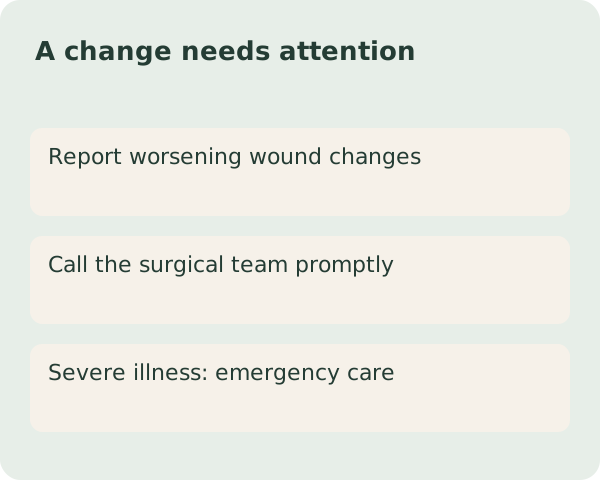
- Report new or worsening wound symptoms promptly.
- Seek emergency help for serious illness, confusion or breathing difficulty.
- Arrange written aftercare and a local handover before travel.
When a change needs prompt assessment
Contact your surgical team promptly if the wound becomes increasingly painful, warmer, more swollen or red, if pus or cloudy fluid appears, or if you develop fever or feel increasingly unwell. These changes do not prove an infection, but they deserve a clinical assessment rather than an online diagnosis. Explain that you recently had an abdominoplasty and describe how the symptoms have changed. Ask whether the team wants to see you urgently, and do not wait for the next routine review if symptoms are worsening. [1][2]
Some discomfort and swelling are expected after an operation. What matters is the pattern, the wound and your overall condition. A new change after initial improvement, pain that is increasing rather than settling, or a spreading area of warmth is worth reporting. Fever is not required for infection, and pain medicines may change how you feel. Ask the treating team what to watch for in your own situation before discharge.
When to seek emergency help
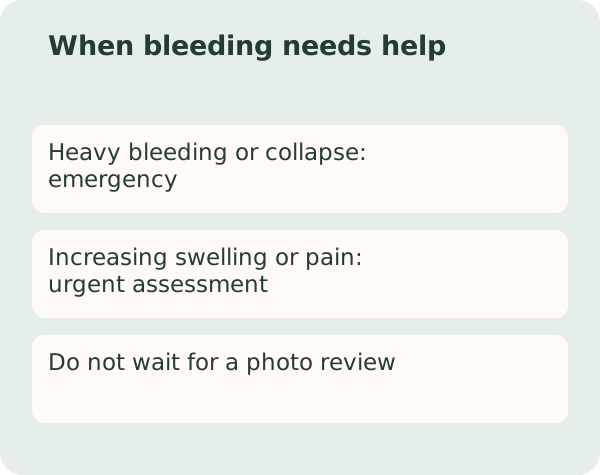
Call the local emergency number or go to an emergency department immediately if you are seriously unwell, have difficulty breathing, new confusion or slurred speech, collapse, or develop blue, grey, pale or blotchy skin or lips. Sepsis is a life-threatening reaction to infection and may develop quickly. It can occur without every warning sign, so trust your concern if something feels seriously wrong. In South Korea, the emergency medical number is 119; if you are elsewhere use the local number. [5] Do not wait for an aesthetic clinic to reply to a message before seeking emergency care. [3]
Chest pain or sudden breathlessness after surgery can also have causes other than infection, including a blood clot. These are emergencies regardless of the wound’s appearance. If a companion is present, ask them to tell the emergency team when and where your operation occurred and what medicines you take. Do not delay calling for help while collecting documents or photographs.
Infection can look different in different people
A surgical-site infection is an infection in the area where an operation was performed; it can involve skin or deeper tissues. Signs can include increasing pain, redness, cloudy drainage or fever, but an individual may not notice all of them. Other problems can also cause swelling or drainage, so an examination is needed to determine what is happening. The incision may be covered by a dressing and the surrounding skin can look different across skin tones. Changes in warmth, tenderness, swelling, drainage and the way you feel may be useful details to report as well. [1]
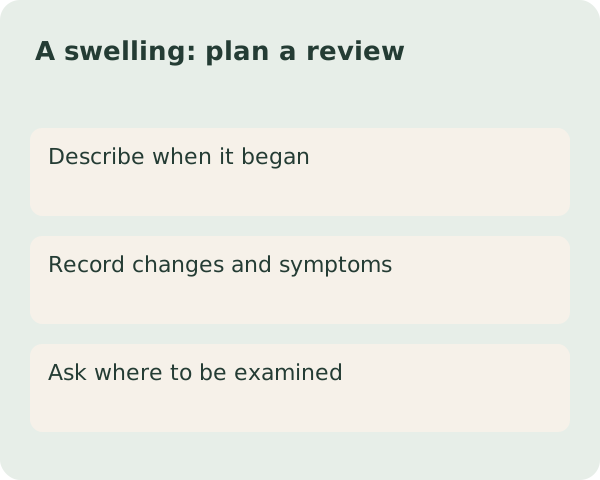
Do not use another patient’s photographs as a diagnostic test. Lighting, healing stage, skin tone and the procedure vary. If your surgeon asks for a photograph, follow the agreed secure communication method, but do not rely on it as a substitute for an examination or let taking a picture delay urgent treatment.
What information should you give when you call?
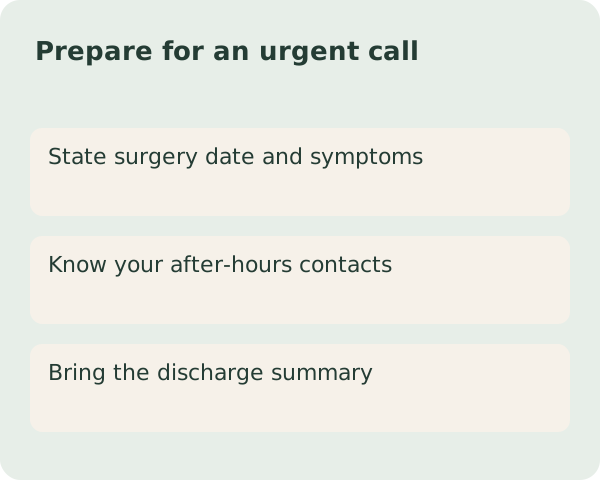
State your name, the operation and date, the clinic and operating surgeon if known, and where you are staying. Give the time the symptom started and whether it is spreading or worsening. Describe the location of pain, warmth or swelling; the colour and amount of any drainage; and whether the dressing has become wet. Tell the clinician if you have measured a temperature, but say how and when it was measured instead of trying to interpret a number on your own.
Mention drains, your medicines and allergies, relevant conditions such as diabetes, and whether you are able to eat, drink and move. If you have taken pain medicine, tell them what and when. Repeat the advice back: where to go, how soon, which entrance to use and who will receive you. If you cannot reach the surgical team and the concern is worsening, seek urgent local medical assessment rather than waiting indefinitely.
Prepare an access plan before your operation
A useful safety plan starts before you travel. Ask who is responsible for follow-up, whether an in-person review is included and how to contact a clinical professional outside office hours. Clarify whether a coordinator can connect you with a surgeon or nurse and how long a response is expected for a concern that cannot wait. Ask for an emergency destination near your accommodation and a practical transport plan, including who will accompany you if you are not well enough to travel alone.
Request written instructions in a language you understand. If an interpreter is needed, ask whether one is available during urgent consultations as well as during the initial visit; do not assume this from an English-language website. Save the address and emergency number where your companion can find them. Discuss the possibility that treatment, review or travel may need to change if healing is not progressing as expected.
What may happen during a clinical review?
The clinician may ask about your symptoms and medicines, examine the surgical site and consider whether another cause is possible. They decide whether tests, drainage, antibiotics or another treatment are appropriate. CDC notes that surgical-site infections are often treated with antibiotics and that some patients need additional procedures. The right response depends on the examination and the individual problem; it is not possible to select treatment safely from a picture or a generic timetable. [1]
Ask what diagnosis is being considered, which changes mean you should return sooner, how to contact the treating team after the visit, and when the next assessment will occur. If a test is ordered, ask who will communicate the result and what to do if you have not heard. If your symptoms worsen while waiting for a result, follow the urgent-care plan rather than assuming that the test itself provides protection.
Do not start, change or share antibiotics on your own
Do not use leftover antibiotics, a companion’s medicines or a medicine bought without a clinician’s assessment to treat a suspected wound infection. Different causes and different infections need different care, and antibiotics do not replace examination of a concerning wound. Tell the assessing clinician about medicines already taken, including doses and allergies, so they can decide what is appropriate. If a clinician prescribes a medicine, ask how to take it, what side effects to report, and whom to contact if you vomit a dose or cannot obtain it.
Do not stop or change a prescribed treatment without discussing it with the prescriber, except where an emergency reaction requires immediate medical help. If you develop symptoms such as serious breathing difficulty or collapse after a medicine, seek emergency assistance. Keep medication packaging or a list with you if you need another assessment.
Care for the wound and drain as directed
Wash your hands before and after any wound care and follow the written plan for your dressing. CDC advises visitors not to touch the wound or dressing, and to clean their hands. Ask your team who will change the dressing, how it should be kept dry or protected, and what to do if it becomes loose or wet. Do not apply creams, antiseptics, powders or dressings that your team has not approved. These steps support the plan; they cannot guarantee that an infection will not occur. [1]
If you have a drain, learn how to secure and monitor your particular device. Ask what a marked change in drainage, a displaced tube or a non-working system should prompt. Do not remove, reinsert or adjust a drain yourself to meet a travel date. The separate drain guide covers device planning; this guide concerns the symptoms and escalation decisions that need clinical input.
How does infection differ from fluid collection or wound opening?
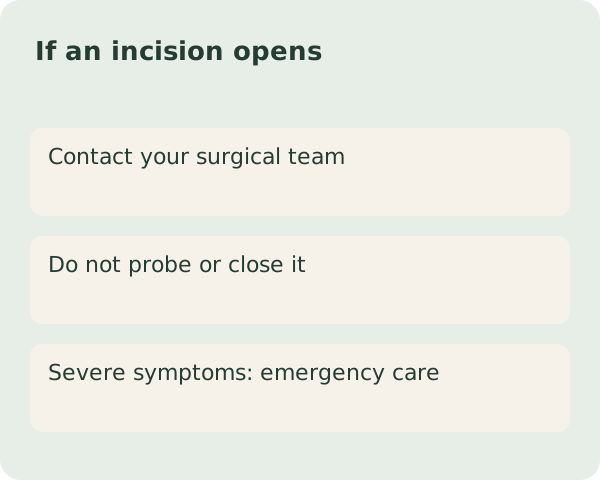
Fluid collection, separation of part of an incision, irritation from a dressing and infection are different problems, although they can occur together. A seroma is a fluid collection and cannot be reliably distinguished from another cause of swelling by touch or a photograph alone. A wound opening should be assessed by the surgical team; do not try to close it yourself. If a change is accompanied by fever, increasing pain, cloudy fluid or a feeling of becoming unwell, tell the clinician all of those details. [1][2]
Use the related fluid-collection and wound-opening guides to prepare specific questions, not to decide that a visit is unnecessary. The surgical team can decide which examination is needed and what treatment or dressing is safe for the wound you actually have.
How do travel and follow-up affect the decision?
Before surgery, ask how long the team expects to monitor you in Korea and what could delay departure. This is an individual plan, not a guarantee of a complication-free trip. Ask how a new infection concern near your scheduled flight would be assessed and who decides when you can travel. A return ticket, hotel booking or another patient’s timeline does not establish that you are fit to fly. You may need to adjust arrangements to complete assessment and care.
Before leaving, request a discharge summary that records the procedure, operative date, medicines, allergies, complications and follow-up plan. Arrange a named receiving clinician at home if ongoing care is expected, and confirm they have agreed to take over. Ask how results and photographs can be shared securely. If you become seriously unwell while in transit or after returning home, seek local emergency care first rather than waiting for the overseas clinic to respond.
What can you discuss to reduce risk?
At your consultation, tell the surgeon about medical problems, previous wound-healing difficulties, allergies and all medicines or supplements. CDC advises discussing conditions such as diabetes and stopping smoking before surgery because these can affect infection risk or treatment. Ask the team how to prepare your skin and whether any hair removal is necessary; CDC advises against shaving near the surgical site with a razor. Follow your treating team’s individual instructions rather than starting a restrictive diet, stopping prescribed medication or buying supplements without advice. [1]
Discuss who will help at your accommodation, how dressings will be supplied, and whether you can reach the wound safely. Ask about hand hygiene and what to do if you are uncertain about an instruction. Preparation reduces avoidable confusion, but no clinic or patient can guarantee an infection-free outcome.
A listed Korea consultation option
VeryGood Plastic Surgery is listed in this atlas and its international body-contouring page describes abdominoplasty. That published service is a starting point for a consultation about the planned operation; it does not establish a particular surgeon’s availability, an individual infection-management plan or superior outcomes. Review the clinic profile and official international page, then ask who would perform your surgery, who conducts follow-up and where you would be assessed if a wound concern arose. Confirm current arrangements directly before committing. [4]
Useful questions include: Who answers an urgent message overnight? Where would an in-person examination occur? What written instructions and interpretation support are available? How would a serious problem be referred to emergency care? What costs could arise from an extra visit or a longer stay? Compare the answers as part of a broader decision and seek another opinion if they are unclear.
Frequently asked questions
Does redness always mean infection? No. Redness and discomfort can have different causes, and the course matters. New or spreading redness, increased pain, warmth, pus, fever or feeling unwell should be discussed promptly with the treating team. [1][2]
Can I send a photograph instead of attending? A photo can help the team understand a change if requested, but it cannot reliably rule out a deeper problem. Follow their advice about being examined, and seek emergency help immediately for severe symptoms.
Can an infection develop after I return home? A concern may arise after leaving the clinic or after returning to your home country. Seek local care when needed and share your operation and medication details. A planned handover is useful, but it must not delay urgent assessment.
Should I wait for a fever? No. Not everyone has every symptom. Escalate a worsening wound or a significant change in how you feel even if you have not measured a fever.
Explore the profiles mentioned in this guide
Use these source-linked profiles to prepare questions and confirm your individual plan directly.
Continue with the related guides
Put this information into your consultation
Use the consultation checklist and budget worksheet to record your questions. Explore tummy tuck clinics in South Korea and doctor profiles before asking a clinic about your individual plan.
Sources & further reading
Source links support the topic or the attributed provider details. Practical preparation prompts are editorial guidance. Checked 3 November 2026