- Identify the treating clinic separately from the facilitator.
- Ask for limits and exclusions behind an all-inclusive label.
- Keep a direct clinical contact and a responsibility map.
Who provides each part of the package?
Write down the clinic, operating surgeon, facilitator, accommodation provider, and transport provider. Ask which entity signs the medical agreement and which receives each payment. If a platform presents several clinics, ask how a recommendation is selected and whether commercial relationships affect the options shown. Do not assume an agent’s registration, insurance, or service promise applies to the treating institution. Keep the clinic’s direct contact route as well as the facilitator’s contact. The person coordinating travel may be helpful, but you should know how to reach the clinical team responsible for your care. A transparent package makes roles easier to understand rather than hiding them behind one brand.
Ask what the package includes and excludes
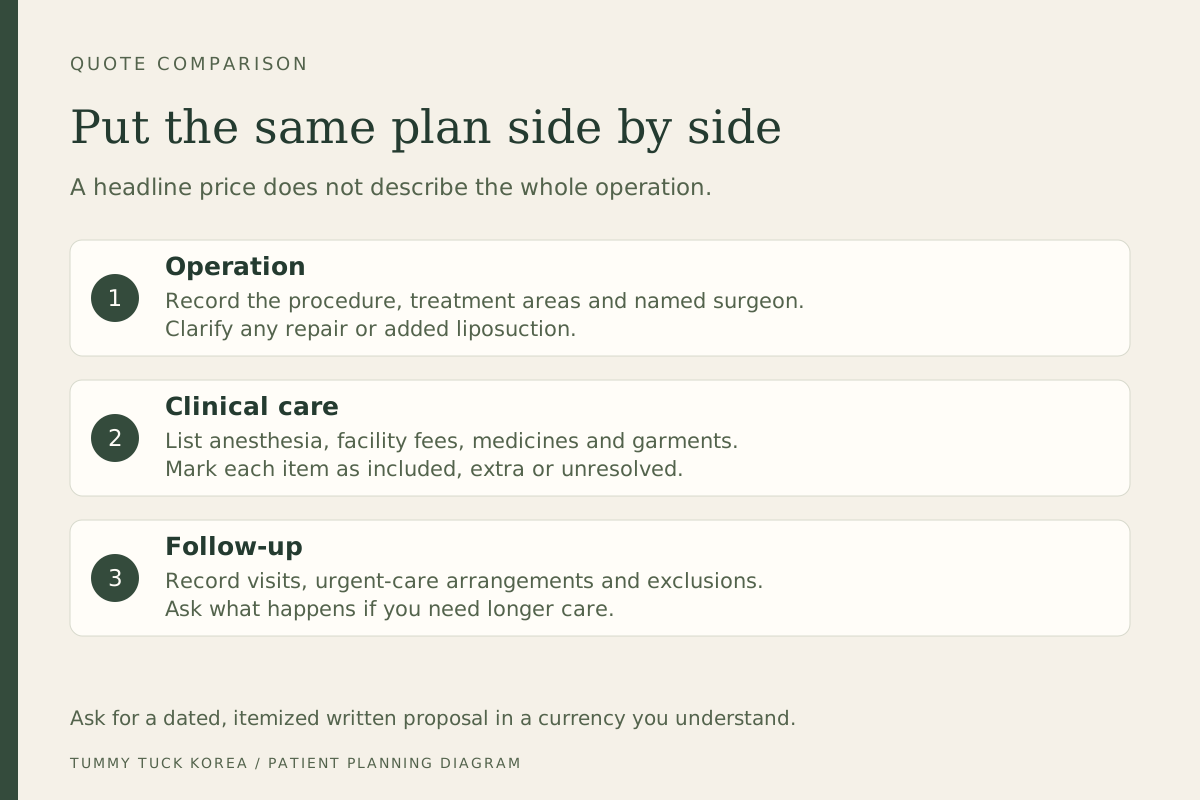
Request an itemized description of surgery, anesthesia, facility, tests, medication, garments, follow-up, interpretation, transfers, and lodging. Ask about limits such as the number of nights or visits. Record what happens if the procedure changes after examination or if recovery requires a longer stay. Do not infer that all-inclusive means every possible medical or travel expense. Ask who approves additional services and how their cost is communicated. Compare the package with your own needs rather than assuming every included extra has value. A sightseeing excursion, for example, should not be allowed to create an expectation that you will be ready for it during recovery.
Keep clinical advice with clinicians
A facilitator may collect photographs and relay questions, but ask who makes the clinical recommendation. Arrange a consultation with the proposed operating surgeon and obtain their explanation of the procedure and alternatives. If a coordinator reassures you about a medical concern, ask whether a clinician has reviewed it. Do not let a package schedule replace an individual assessment. The same distinction matters after surgery: know how a concern reaches a healthcare professional and what happens outside office hours. A single convenient chat is not enough if it does not connect to the appropriate person when the question changes from transport to treatment.
Check changes, complaints, and continuity
Ask what happens if the chosen surgeon becomes unavailable, the accommodation changes, or the facilitator stops responding. Request the route for complaints about each service and the records you will receive. If the clinic and agency give different answers, ask them to clarify responsibility in writing before paying. Keep copies of the terms and any amendments. This guide does not determine contractual liability or interpret Korean law. It gives you a way to identify uncertainty while there is still time to resolve it. An arrangement that depends entirely on one individual coordinator may be vulnerable to ordinary staff changes, so ask for organizational contacts as well.
Build a responsibility map
Use one row for every promised service and columns for provider, contact, payment recipient, included limit, and backup. Add a separate row for clinical follow-up after you return home. Mark any unclear responsibility rather than assigning it yourself. Review the map with the package seller and ask the clinic to confirm the clinical elements. Then decide whether the arrangement is simpler than booking separately and whether the remaining limitations are acceptable to you. This is a comparison method, not an endorsement of packages or independent travel. The best format for your situation is the one whose responsibilities and care arrangements you can understand and realistically use.
Ask how recommendations are selected
When a facilitator recommends one clinic, ask what criteria were used and whether the organization has a commercial relationship with that provider. Ask whether you can contact the clinic directly for clinical questions and whether choosing another provider changes the facilitator’s fee. A commercial relationship does not by itself establish poor care, but it is relevant context for interpreting a recommendation. Keep factual claims about the surgeon separate from the facilitator’s opinion. If the package promises exclusive access or a special arrangement, ask what that means in practical terms. The goal is transparency about how the options reached you, not an assumption that every recommendation is independent or that an agency can substitute for your own consultation with the clinician responsible for treatment. Ask for the clinic invoice and clinical documents directly from the treating institution, even when the facilitator maintains a separate booking record for the package.
Put this information into your consultation
Use the consultation checklist and budget worksheet to record your questions. Explore tummy tuck clinics in South Korea and doctor profiles before asking a clinic about your individual plan.
Sources & further reading
Source links support the topic or the attributed provider details. Practical preparation prompts are editorial guidance. Checked 20 October 2026