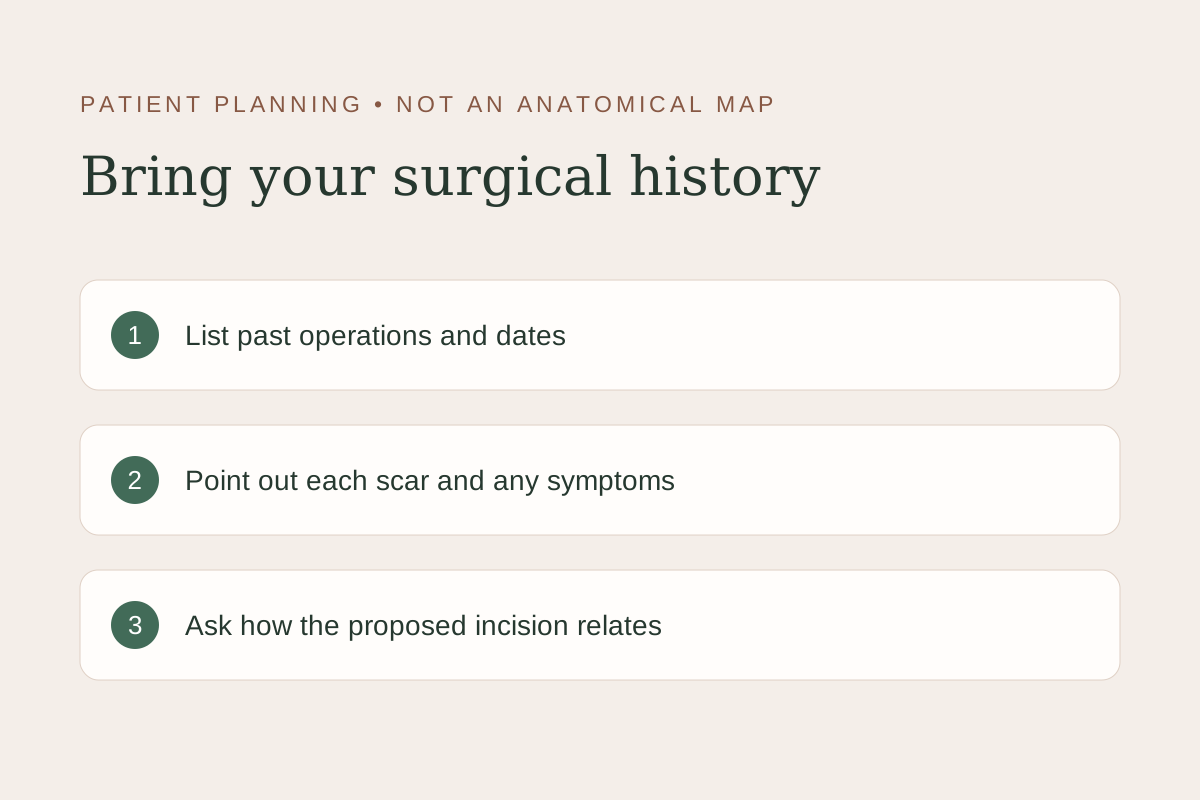
- Share bariatric records and the current weight trajectory early.
- Coordinate nutrition and readiness with established clinicians.
- Treat contouring as a separate goal from further weight loss.
What bariatric records and results should the surgeon review?
Include the type and date of bariatric procedure, subsequent operations, current weight trend, medications, supplements and any known nutritional or digestive concerns. Bring recent results that your usual team considers relevant, rather than ordering tests independently from an online checklist. The plastic surgeon can decide what additional assessment is required. ASPS preparation guidance includes clearance from a bariatric surgeon or primary-care doctor when appropriate. That clearance should be part of communication between teams, not a generic document obtained only to satisfy an administrative box. Ask what information the Korean clinic needs before it can make a meaningful recommendation. Early record review can prevent an expensive trip based on an incomplete picture of your health.
Is skin removal another weight-loss operation?
Abdominoplasty removes excess skin and selected tissue; it is not a continuation of bariatric weight-loss treatment in surgical form. Ask what contour change is realistic at your present weight and whether further planned weight change would alter the result. Avoid setting a goal based on how much the removed tissue might weigh. The relevant outcome is the shape, comfort or function the operation is intended to improve. If your weight is still changing substantially, discuss whether reassessment later would produce a more durable plan. A lower number on the scale is not a reason to skip evaluation of nutrition, fitness or chronic conditions. The assessment should consider the whole patient, not only whether there is enough loose skin to remove.
Who should assess nutrition and supplements?
Tell both teams if eating, tolerating foods or maintaining prescribed supplements has been difficult. Ask who is responsible for assessing and managing nutritional concerns before and after surgery. Do not start high-dose supplements or abandon your established regimen because a cosmetic package includes a generic recovery product. Your needs may differ from those of a patient without bariatric surgery. Clarify how food and fluids will be managed during your stay and whether the accommodation can support the plan recommended by your clinicians. If a caregiver is helping, make sure they understand the instructions. The aim is coordination, not self-prescribing a wound-healing diet from social media. Ask how the team would respond if intake becomes difficult after the operation.
How should staged surgery and care at home be coordinated?
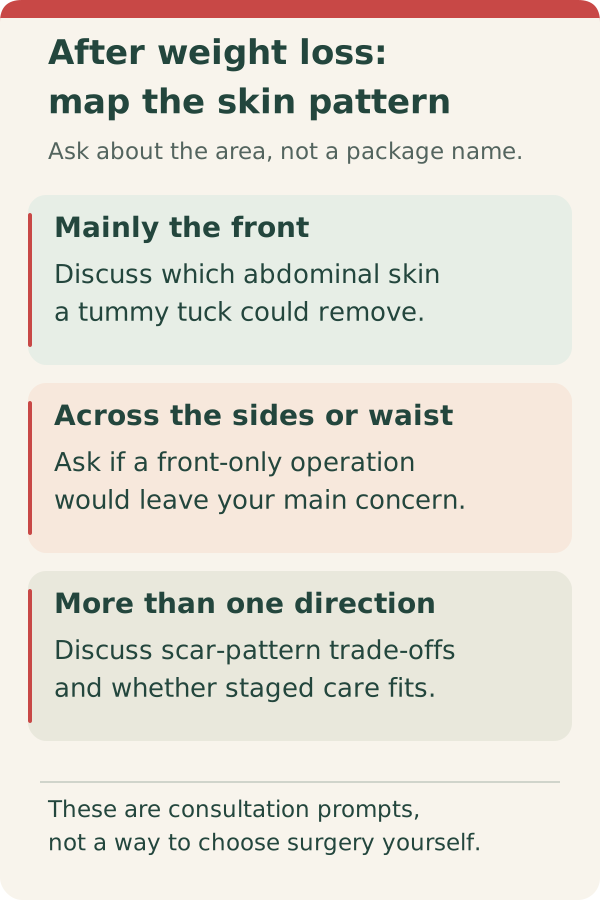
Post-weight-loss body contouring may involve more than one area and more than one operation. Ask whether the abdomen is the best first priority and how its treatment relates to future procedures. Request a realistic explanation of scars and residual looseness. For international care, confirm how the plastic surgeon communicates with your clinicians at home and how records will be supplied. Include a contingency for a longer stay or local wound care rather than spending the entire budget on the initial package. If a clinic is unwilling to review the bariatric history or discourages contact with your established team, that is a reason to seek another opinion. The best plan preserves the health progress achieved through weight-loss treatment while addressing the skin concerns that now matter to you.
Put this information into your consultation
Use the consultation checklist and budget worksheet to record your questions. Explore tummy tuck clinics in South Korea and doctor profiles before asking a clinic about your individual plan.
Sources & further reading
Source links support the topic or the attributed provider details. Practical preparation prompts are editorial guidance. Checked 20 October 2026