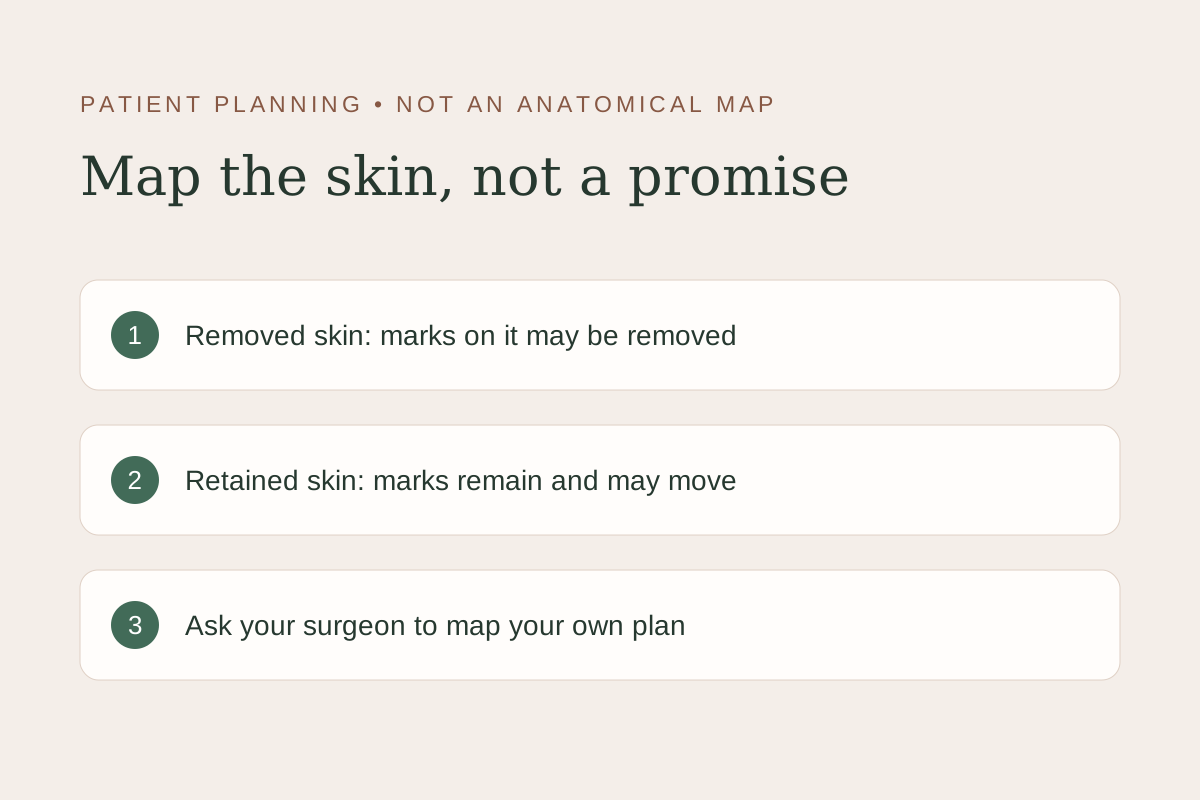
- Obtain one coordinated medication and fasting plan from your clinical team.
- Share dose changes and digestive symptoms before committing to travel.
- Separate weight-loss progress from readiness for skin-removal surgery.
Why does a weight-loss medicine matter to anesthesia?
GLP-1 medicines can slow stomach emptying. Food remaining in the stomach can move back into the throat and enter the lungs during general anesthesia or deep sedation, a complication called aspiration. The issue is therefore relevant even when the operation treats loose abdominal skin rather than the digestive system. Tell the anesthesia clinician about semaglutide, tirzepatide and other diabetes or weight-management medicines, including products prescribed outside Korea. [2]
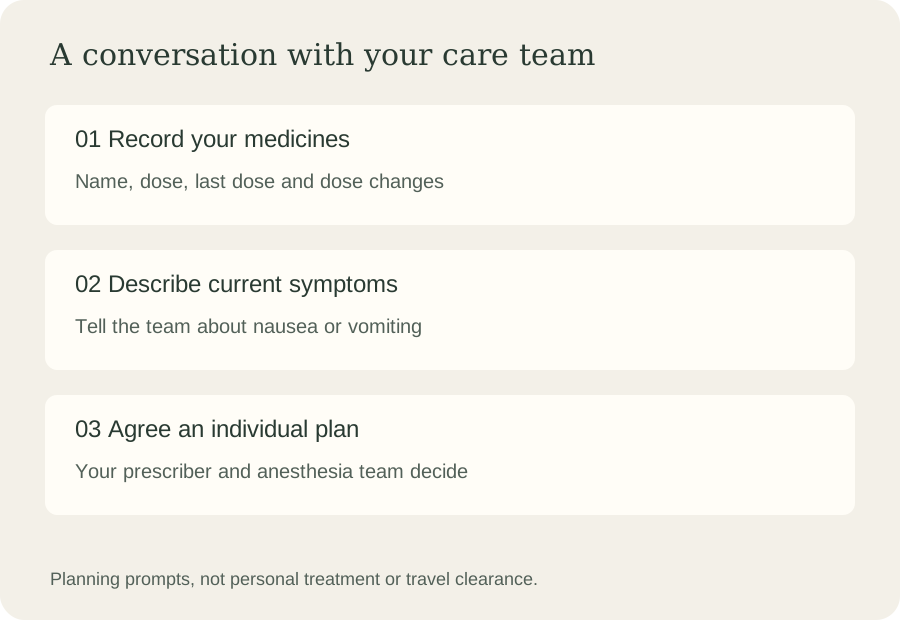
Make your medicine recognizable across borders: bring the generic name as well as the brand, a photograph of the original label, and your prescription details. A message saying only “weekly slimming injection” leaves too much unclear. Include tablets, injections, supplements and nonprescription products in the same list. If you do not know what a product contains, say so and ask your prescriber or pharmacist to clarify before the clinical assessment.
Do I have to stop Ozempic, Wegovy or Mounjaro before surgery?
There is no universal stopping timetable that this website can safely give you. The 2024 multi-society approach considers the balance between aspiration concerns and the medical consequences of changing treatment. It emphasizes shared decisions between the prescribing, anesthesia and procedural teams. The document also acknowledges limitations in the available evidence; it is guidance rather than a guarantee of safety. [3]
If your clinic sends a standard instruction that differs from your prescriber's advice, forward both messages to the clinicians and request a reconciled written plan. Do not choose whichever answer best fits your flight. Ask who has reviewed your exact medication, what information remains missing and when the final instruction will be issued. A booking coordinator can organize that exchange, but should not be the only person making a medication decision. Keep the final version accessible to your companion as well as yourself.
Which changes could alter the date or preparation?
Recent dose increases, significant gastrointestinal symptoms and other conditions affecting stomach emptying can change the assessment. The ASA summary describes options such as a clinician-directed liquid-only diet, a different anesthesia approach, selected use of gastric ultrasound, or postponement. These options are not a home checklist to perform yourself. [1]
Before a remote appointment, write down when treatment started, the current dose, when it last changed and whether another increase is planned. Describe symptoms in ordinary language: what you feel, when it began, whether it is changing and whether eating or drinking has become difficult. Do not minimize symptoms to preserve a surgery date. Ask the team which changes require a message before departure and which require assessment sooner. A useful reply identifies a responsible clinician and a contact route, rather than merely repeating that you should arrive fasting.
Does medication-assisted weight loss mean I am ready for a tummy tuck?
Weight loss and surgical readiness are separate questions. ASPS describes body-contouring candidates in terms of stable weight, health, realistic goals and commitment to healthy habits, rather than a particular method of losing weight. [4] A medicine name does not determine how much skin should be removed or which scar pattern is appropriate.
Keep this consultation focused on the connection between your longer-term treatment and the proposed operation. Are you still expecting substantial change? Is your prescriber reviewing treatment goals? Would the surgeon make the same proposal if your weight changed further? Bring a simple weight history and explain what you hope surgery will improve, such as a troublesome fold or clothing fit. For a detailed comparison of skin-removal patterns, use our guide to tummy tuck after major weight loss. If the main uncertainty is timing, the stable-weight guide explores that decision separately. Waiting or deciding against surgery remains a legitimate choice.
What should I send before paying for travel?
Create one dated consultation packet so that the surgeon, anesthesia clinician and prescriber are working from the same information. Include your medication list, dose-change history, current symptoms, relevant previous operations and contact details for your usual clinician. Ask the clinic which records it needs rather than purchasing a broad set of tests on your own.
Add a short cover note with three practical questions: has an anesthesia clinician reviewed this history, what remains conditional on examination in Seoul, and what could lead to postponement? Request answers before treating a preliminary quotation as approval. Keep a copy of every document you send and record any later change in one place. If an interpreter will be needed, confirm arrangements for the clinical discussion, consent and discharge instructions, not just the initial sales conversation. An English website alone does not establish who will interpret a detailed medication discussion. Ask for a concise written summary after the conversation so that questions about medicines are not lost among accommodation and payment messages.
How do I turn fasting advice into a clear written plan?
Ask for instructions that distinguish medicines, solid food and permitted drinks. If a special liquid diet is prescribed, ask the team to define exactly what it means for you and how it fits the separate fasting rules. Do not assume that a protein shake, soup or familiar breakfast drink qualifies simply because it can be poured. Your clinicians should resolve those details.
Make the instructions operational: request the relevant date and local Korean time, the number to call if the operating schedule changes, and what to do if you accidentally eat or drink outside the plan. Tell the team honestly if an instruction was not followed. Before leaving the appointment, explain the plan back in your own words and ask the clinician to correct any misunderstanding. This is especially useful when instructions pass through translation or when several versions have arrived through different messaging channels.
What extra coordination is needed if I also have diabetes?
Surgery, changes in eating and postoperative illness can complicate glucose management. Diabetes preparation therefore needs a broader plan than the GLP-1 decision alone, including other medicines and monitoring. MedlinePlus advises working with the healthcare provider and surgeon and obtaining individualized instructions. [5]
Ask who will handle your diabetes care during admission and after discharge to accommodation. If you use a monitor or pump, raise that early instead of assuming the surgical facility supports your usual setup. Your companion should know where the written plan and supplies are kept and which clinical service to call. Include the contact details of the clinician at home who will resume care after the trip. Our diabetes-and-tummy-tuck guide covers this wider coordination; a reassuring answer about one injection does not replace that discussion.
Plan recovery and the return journey before booking a fixed departure
CDC guidance identifies additional risks when surgery and travel are combined, including blood clots, and emphasizes continuity of care and access to records. [6] A departure date needs clinical review; a package itinerary cannot establish fitness to fly.
For GLP-1 treatment specifically, ask who decides the postoperative medicine plan and how your prescriber will receive updates if recovery changes your usual routine. Request instructions for contacting the team about difficulty eating, vomiting or uncertainty about a dose. Do not borrow another patient's restart schedule. Discuss how an extended stay would affect access to your prescribed medicine, appropriate storage and supplies with your prescriber or pharmacist before travel.
Budget for possible extra accommodation, a companion's changed itinerary, local reviews and follow-up after returning home. Ask what the quoted surgical fee includes and what postponement or additional care would cost. You do not need a promised complication rate to make these practical questions worthwhile; you need clear responsibility if the original plan changes.
A listed consultation option: Deesse and Dr. Jin Hyung Kim
We recommend considering the Deesse Plastic Surgery profile and the Dr. Jin Hyung Kim profile as a starting point for a procedure-specific consultation. The selection is based on a concrete published connection: Deesse's international body-contouring page lists abdominoplasty and names Dr. Kim as its body-contouring surgeon; his clinic biography identifies him as chief director. [7][8] These are provider-published facts, not an independent assessment of outcomes.
This recommendation does not establish specialist GLP-1 expertise or a particular anesthesia protocol. Ask whether your medication history can be reviewed by the clinician responsible for anesthesia before you commit, and how that clinician will coordinate with your prescriber. Confirm the actual operating surgeon, interpreter arrangements and follow-up responsibilities. Review Deesse's international website to request a consultation about suitability. The linked clinic and doctor profiles provide further questions to support that discussion.
Frequently asked questions
Can I use a friend's instructions if we take the same medicine? No. The multi-society guidance bases planning on the individual's circumstances and therapeutic needs. [3] Ask your own team to explain its recommendation rather than transferring another person's timetable to your operation.
What if I already missed a dose? Give your prescriber and anesthesia team the exact date and dose history. Ask for instructions; do not guess at a catch-up schedule or assume the missed dose resolves the surgical assessment. Update the shared medication record so the clinicians are not working from an outdated list.
What if I feel well on the day? Report your current condition accurately, but do not use feeling well as permission to disregard the agreed preparation. The final assessment belongs to the clinical team. Bring the written plan and be ready to describe what you actually took, ate and drank.
Can a remote consultation clear everything before I fly? Ask exactly what the remote review establishes and which decisions remain conditional. Photographs can support a discussion of contour goals, but they are not a replacement for the clinical and anesthesia assessment needed for your operation.
What if surgery is postponed after I arrive? Ask for the reason, the next assessment step and written advice about the medication plan. Clarify cancellation charges and travel changes separately from the medical decision. Do not seek an immediate operation elsewhere simply to avoid changing the itinerary.
Explore the profiles mentioned in this guide
Use these source-linked profiles to prepare questions and confirm your individual plan directly.
Continue with the related guides
Put this information into your consultation
Use the consultation checklist and budget worksheet to record your questions. Explore tummy tuck clinics in South Korea and doctor profiles before asking a clinic about your individual plan.
Sources & further reading
Source links support the topic or the attributed provider details. Practical preparation prompts are editorial guidance. Checked 25 October 2026
- ASA: 2024 multi-society GLP-1 guidance, updated February 2025 ↗
- ASA patient information: diabetes and weight-loss drugs before surgery ↗
- Kindel and colleagues: multi-society perioperative GLP-1 clinical practice guidance ↗
- ASPS: body-contouring candidates ↗
- MedlinePlus: preparing for surgery with diabetes ↗
- CDC Yellow Book 2026: medical tourism ↗
- Deesse: international body-contouring service ↗
- Deesse: Dr. Jin Hyung Kim biography ↗