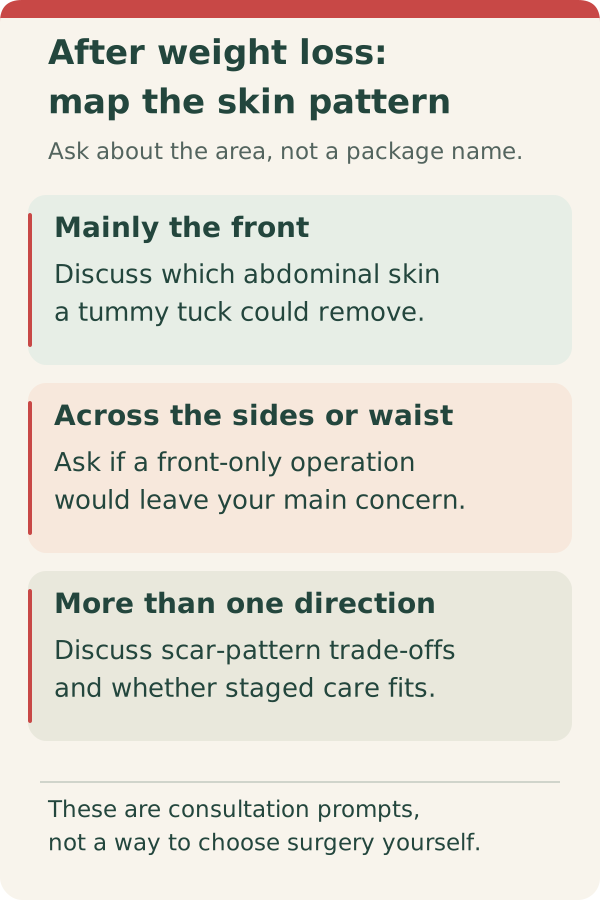
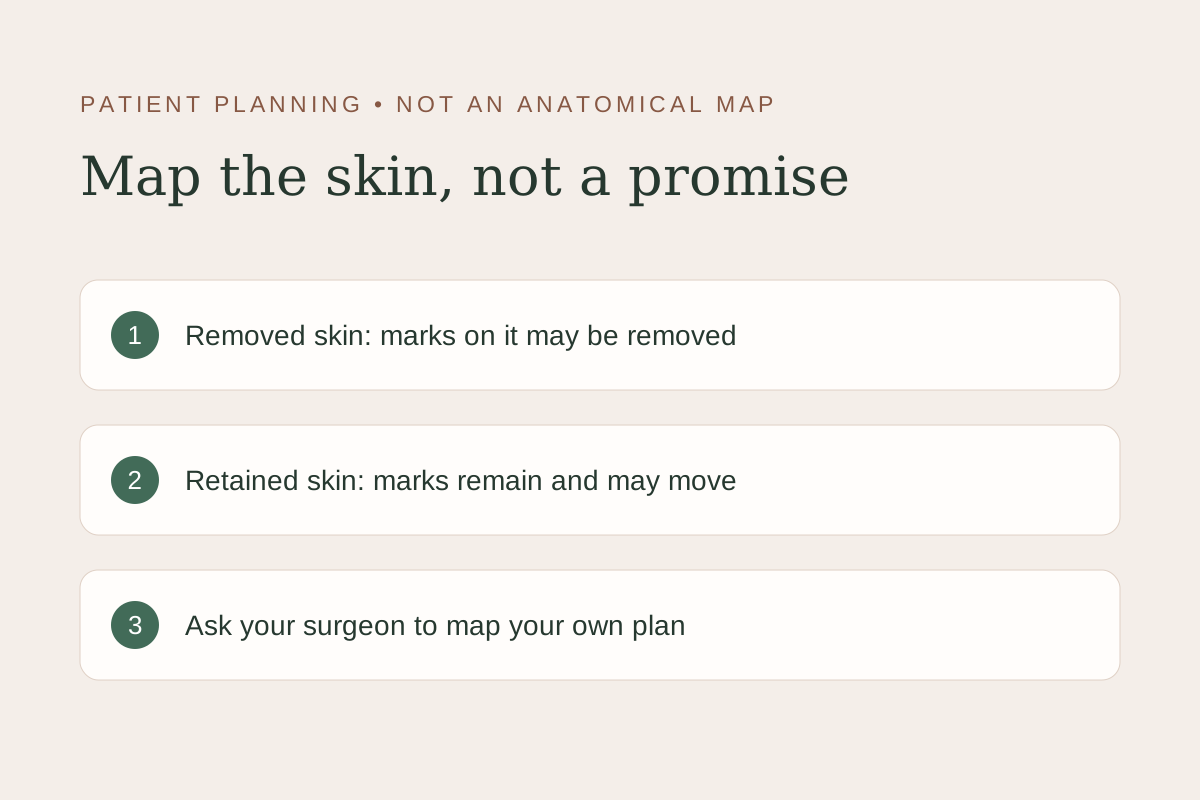
- Exercise and skin removal address different goals.
- Surgery does not replace fitness or individualized rehabilitation.
- Use the actual procedure to plan a staged return to activity.
Is the goal skin removal, strength or relief of symptoms?
If the main concern is a hanging fold after substantial weight loss, increasing abdominal exercise is not the same intervention as removing that fold. If the concern is weakness or difficulty with movement, skin removal alone may not address it. Ask a qualified clinician to help distinguish those issues. Describe pain, bulging with activity or functional limitations rather than assuming that more exercise or a tummy tuck is the answer. A clinical assessment can identify whether rehabilitation, medical evaluation or a surgical discussion is appropriate. The aim is not to prove that you have exhausted every workout before being allowed to consider surgery. It is to choose an intervention that matches the actual problem and your own priorities.
Can rehabilitation and surgery have different roles?
You may value improved fitness while still being bothered by loose skin. You may also decide that the scar and recovery of surgery are not worthwhile despite persistent skin excess. Both choices are reasonable. Ask the surgeon what improvement is possible without claiming that an operation will create a trained abdomen. If wall repair is proposed, discuss how postoperative rehabilitation fits into the plan rather than assuming that tightening tissues automatically restores every aspect of strength. Conversely, if a movement specialist recommends a program, ask what outcome it is intended to improve and how progress will be evaluated. Different clinicians can contribute to the same overall goal without one treatment replacing all others.
How is a return to exercise planned after the actual operation?
Before surgery, tell the team what activities you do and which you hope to resume. Running, swimming, weight training, yoga and manual work place different demands on the body. Ask for staged guidance specific to the planned procedure and any abdominal-wall repair. Do not follow another patient's return-to-exercise timetable or use pain alone as the measure of readiness. The treating team should explain when assessment is needed before advancing activity. If you are travelling to Korea, consider whether you can continue follow-up or rehabilitation at home and what documentation a local professional will need. A clear plan helps avoid both premature loading and unnecessary avoidance of movement due to uncertainty.
How should I judge success beyond weight or photographs?
After recovery, consider the outcome in terms of the goal agreed before surgery: less overhang, improved clothing comfort or a particular contour change. Do not judge the operation solely by a scale reading or compare the result with an athlete's photograph. If function was a goal, use the measures and follow-up agreed with the relevant clinician. Continue to distinguish skin, strength and general health rather than treating one as proof of the others. If you decide against surgery, that does not mean you have failed to address your body. You may choose clothing adaptations, symptom management, rehabilitation or simply no intervention. The useful endpoint is an informed choice that fits your life, with realistic expectations for both exercise and surgery.
Put this information into your consultation
Use the consultation checklist and budget worksheet to record your questions. Explore tummy tuck clinics in South Korea and doctor profiles before asking a clinic about your individual plan.
Sources & further reading
Source links support the topic or the attributed provider details. Practical preparation prompts are editorial guidance. Checked 20 October 2026