- A visible bulge does not establish the full diagnosis.
- Rehabilitation and skin removal address different concerns.
- Define success by meaningful goals as well as examination findings.
How are suspected diastasis and related symptoms assessed?
Tell the clinician whether your concern is a visible midline bulge, difficulty with movement, a feeling of weakness or another symptom. Do not assume every back or pelvic symptom is caused by diastasis. An appropriate assessment may involve a clinician experienced in abdominal-wall or postpartum rehabilitation as well as a surgical opinion. Cleveland Clinic describes physical therapy and guided exercise as treatment options and notes that surgery may be considered in selected circumstances. A self-check or online measurement is not a complete treatment plan. Ask what the examination shows, whether additional assessment is needed and which symptom the proposed treatment is intended to improve. This keeps a cosmetic consultation from becoming a promise to solve problems that have not been properly evaluated.
Can guided rehabilitation help before surgery is considered?
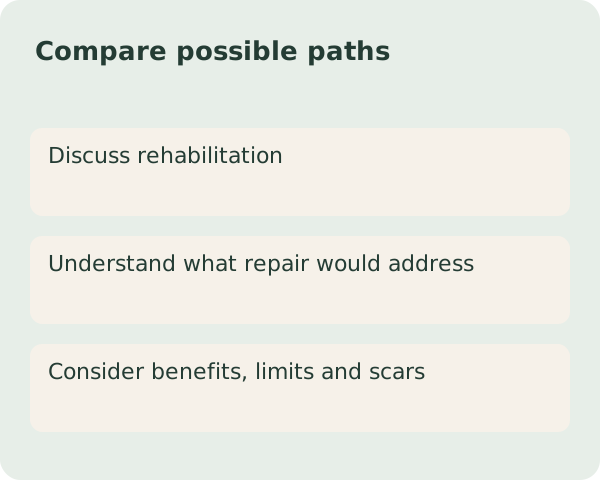
Ask whether a tailored movement program is appropriate before making a surgical decision. The aim is not to prove that you have tried hard enough or to blame you if skin remains loose. Rehabilitation and skin excision address different issues. A clinician can help determine what movement is suitable and how progress should be judged. Avoid choosing exercises solely because they are labeled safe for diastasis online; your symptoms and overall health may require individual guidance. If surgery is later considered, ask how rehabilitation fits before and after it. The discussion should make clear which improvements may be achievable without an operation and which concerns, such as substantial redundant skin, are unlikely to be answered by strengthening alone.
When does the discussion include surgical repair?
If repair is recommended with a tummy tuck, ask about its extent and the expected benefit. Is the objective primarily contour, function or both? How is a coexisting hernia assessed? What would the result look like if skin removal were performed without repair, or if no skin removal were needed? These questions help identify the reason for each component. The phrase muscle tightening should be explained in ordinary anatomical language rather than treated as a universal upgrade. Ask how the plan affects recovery restrictions and whether a rehabilitation clinician will be involved afterward. A written operation description is especially useful for an international patient, because a clinician at home may later need to know which tissues were repaired.
Is a gap measurement enough to decide treatment?
A measurement can inform assessment, but it should not become the only definition of success. Consider the activities you want to perform, the appearance change you value and the trade-offs of surgery. Ask what improvement is realistic and what symptoms may persist. If a clinic guarantees complete functional recovery or a perfectly flat abdomen from a photograph, seek a more detailed explanation. For travel to Korea, arrange the continuity of any rehabilitation and obtain the operation record before leaving. The goal is a plan based on your symptoms and anatomy, with an honest distinction between likely benefits and uncertain ones. It is reasonable to choose rehabilitation, surgery, observation or further assessment depending on that discussion.
What separation means and what it does not mean
Diastasis recti describes widening along the midline between the paired rectus abdominal muscles. It can be noticed after pregnancy or other changes to the abdomen. A ridge or bulge may lead you to seek assessment, but an image or a self-measurement does not establish the cause of every symptom. A clinician can examine the abdominal wall, discuss function and consider whether another issue, including a hernia, needs separate evaluation. [1]
It is useful to separate three questions: what the abdominal wall does during movement; whether there is excess skin; and what change you hope to see. These concerns can coexist but do not all have the same treatment. A gap measurement is one observation in a wider assessment, not a compulsory threshold for cosmetic surgery or proof that every pain has the same cause.
Preparing for a meaningful examination
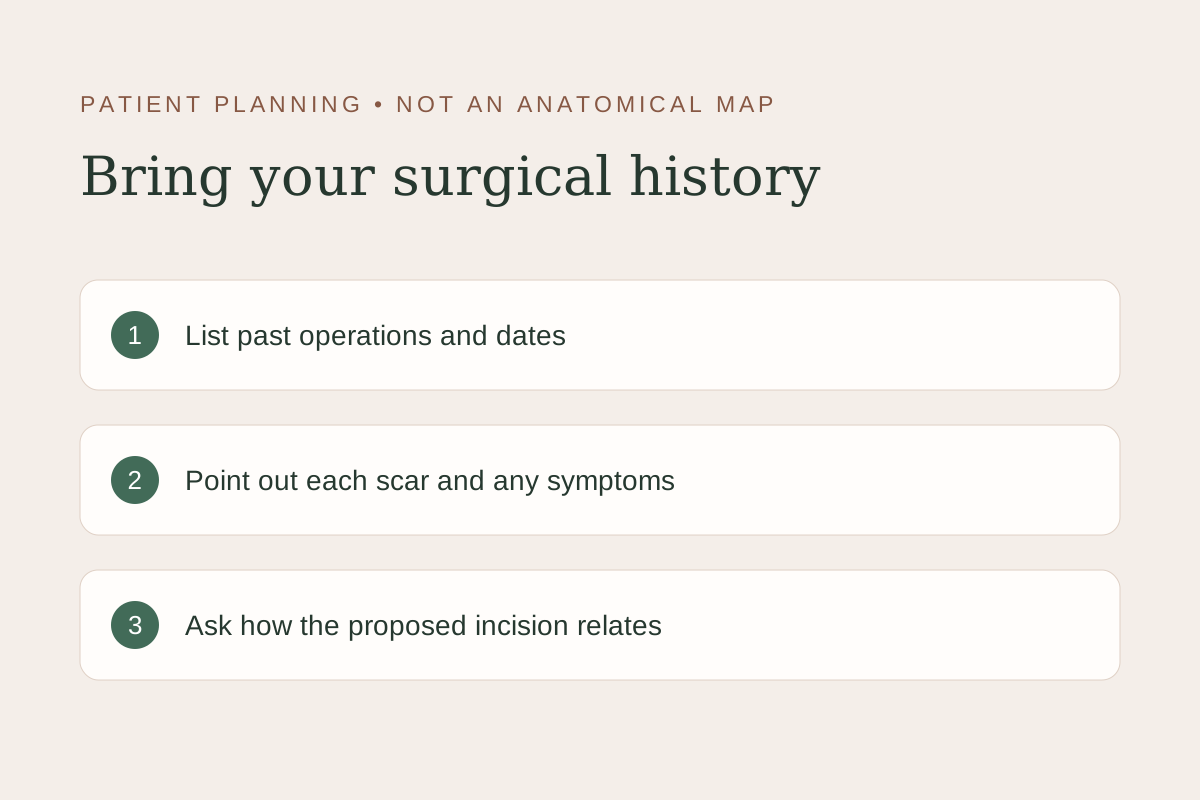
Write down the activities that are difficult, the location and timing of any discomfort, and the appearance change that matters most to you. Bring information about pregnancies, prior abdominal surgery, hernias, medications and relevant medical conditions. Explain whether a bulge occurs at rest or during a particular movement, and ask the clinician to explain the examination in terms you understand. Avoid assuming that a photograph or a single measurement can establish the best operation.
Ask whether the assessment suggests separation, a hernia, another abdominal-wall issue or more than one concern. A hernia involves a different problem and should not be diagnosed or excluded by an online guide. If imaging or a further specialist opinion is proposed, ask why it would change the treatment decision. Clarify which symptoms need urgent evaluation rather than waiting for a cosmetic consultation.
What can rehabilitation reasonably address?
Cleveland Clinic describes guided exercise or physical therapy as options for diastasis, with surgery considered in selected cases. A rehabilitation professional can assess movement, symptoms and goals, and teach a plan suited to your health and stage of recovery. Ask how progress will be judged in daily activities, whether you need pelvic-health or abdominal-wall expertise, and when to return for reassessment. Do not treat a general internet programme as a personal prescription. [1]
Exercise, skin removal and repair address different targets. Rehabilitation may improve function or symptoms for some people, but it cannot promise removal of substantial loose skin. Equally, persistent loose skin does not mean rehabilitation was a failure. If a movement causes pain or marked bulging, discuss it with your clinician rather than repeatedly testing your limits. Ask how rehabilitation will be coordinated if you later decide to have an operation.
How a tummy tuck and abdominal-wall repair differ
Abdominoplasty generally addresses excess skin and may include tightening the supporting midline tissues when appropriate. The exact proposed operation matters: a mini, full or extended procedure may differ in incision, navel management, extent of tissue dissection and whether repair is included. “Muscle repair” is common shorthand; ask the surgeon to describe which tissue will be tightened and the purpose of each step in your written plan. [2]
A wider skin-removal procedure is not automatically required whenever separation is present. Conversely, a skin concern might remain even when function has improved with rehabilitation. Ask the clinician to compare observation, guided rehabilitation and any proposed operation, including scars, recovery, limitations and alternatives. Avoid assuming that every surgeon uses the same technique or that a commercial procedure name establishes an outcome.
Questions about hernia, symptoms and expectations
A hernia and diastasis can coexist but are not interchangeable terms. Ask whether a bulge needs further examination, whether a hernia specialist should assess it and which team would be responsible if repair were needed. If another operation has been proposed, ask how its risks and follow-up would be coordinated. Do not assume that cosmetic skin surgery automatically treats every abdominal-wall concern.
Be specific about expected benefits. A surgeon may be able to discuss contour and the planned tissue repair, but cannot promise that an operation will resolve every back, pelvic or digestive symptom. Ask what could remain unchanged, how scars will be positioned, what revision or complications could involve, and what evidence supports the anticipated benefit for your individual situation. If the answers are uncertain, request that uncertainty in writing rather than treating a rough simulation as a guarantee.
Planning care across countries
International patients should arrange an in-person examination, not rely solely on an online photograph. Ask how prior operative notes and imaging can be reviewed securely by the treating team, what language support is available, and whether any rehabilitation provider at home can coordinate follow-up. Bring a list of questions rather than sending sensitive medical documents through an unverified channel. Confirm exactly where surgery and early follow-up would occur and who is responsible for after-hours concerns.
Your departure plan should allow for an individual recovery assessment. Ask what events would postpone travel, how to obtain the operation report and what instructions your home clinician needs. If the recommended operation or rehabilitation plan is unclear, you can take time for a second opinion. A travel itinerary should serve a safe care plan, not determine the clinical timetable.
A Korea consultation option
VeryGood Plastic Surgery is listed here because its international body-contouring page describes abdominoplasty. That published service makes it relevant for asking whether skin removal and abdominal-wall repair are appropriate to discuss; it does not establish that you need either or independently prove a clinical result. Ask the named surgeon to examine the concern, explain the purpose and limits of any proposed repair, and clarify whether a separate hernia assessment is advisable. [3]
Use the profile and international website linked below as a starting point, then verify the current service and assigned clinician directly. Ask for a written proposal separating the skin procedure, any repair, anaesthesia and follow-up. You may also seek an assessment from a rehabilitation professional at home. The best choice is the one supported by your examination, goals and informed discussion, including the option to defer surgery.
What to take away from your assessment
Before leaving the consultation, ask for a summary of the findings in plain language and the reason for each recommendation. Record which questions remain unresolved and whether another examination is needed. A written plan can help you compare options without confusing a description of a service with a personal diagnosis. Ask how the team will coordinate with a physiotherapist or a clinician at home if you choose rehabilitation first. You do not have to make a surgical decision during the first visit.
Explore the profiles mentioned in this guide
Use these source-linked profiles to prepare questions and confirm your individual plan directly.
Continue with the related guides
Put this information into your consultation
Use the consultation checklist and budget worksheet to record your questions. Explore tummy tuck clinics in South Korea and doctor profiles before asking a clinic about your individual plan.
Sources & further reading
Source links support the topic or the attributed provider details. Practical preparation prompts are editorial guidance. Checked 3 November 2026