- Document relevant asymmetry before surgery.
- Improvement does not mean exact mirror-image symmetry.
- Use consistent photographs and clinician-guided timing for assessment.
Which asymmetries are present before the operation?
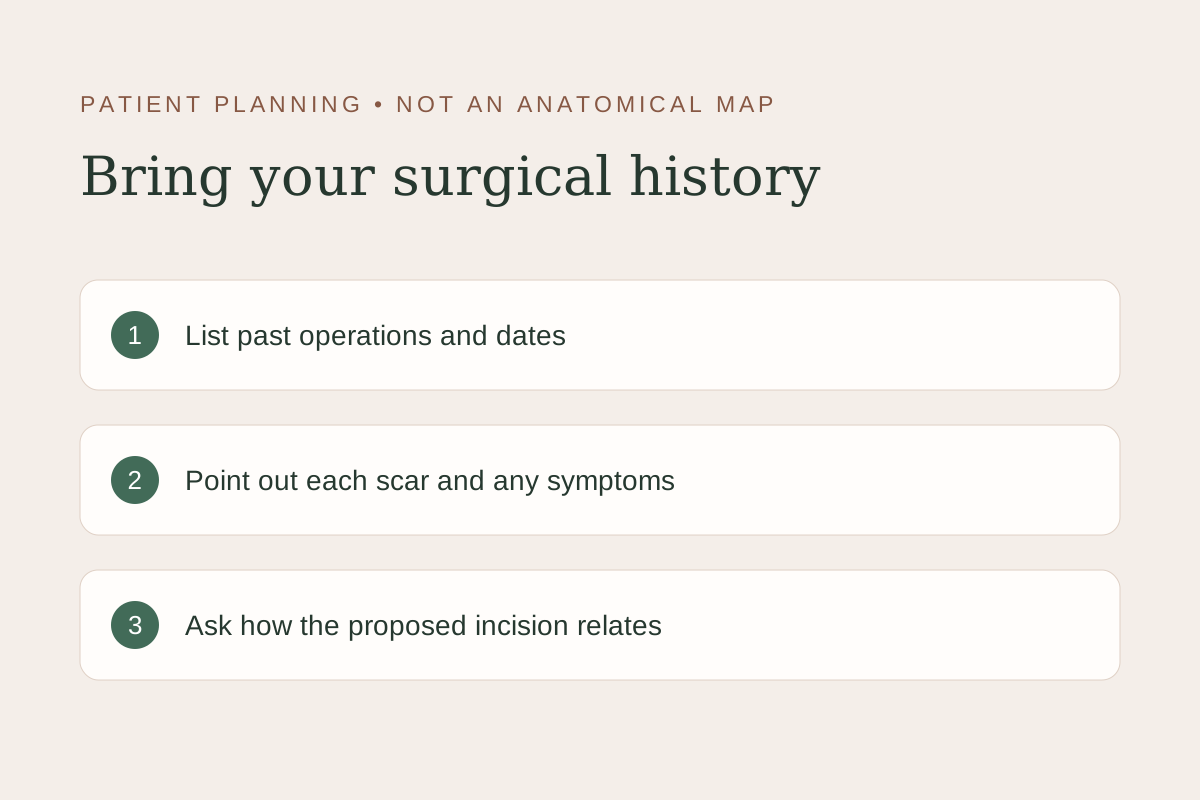
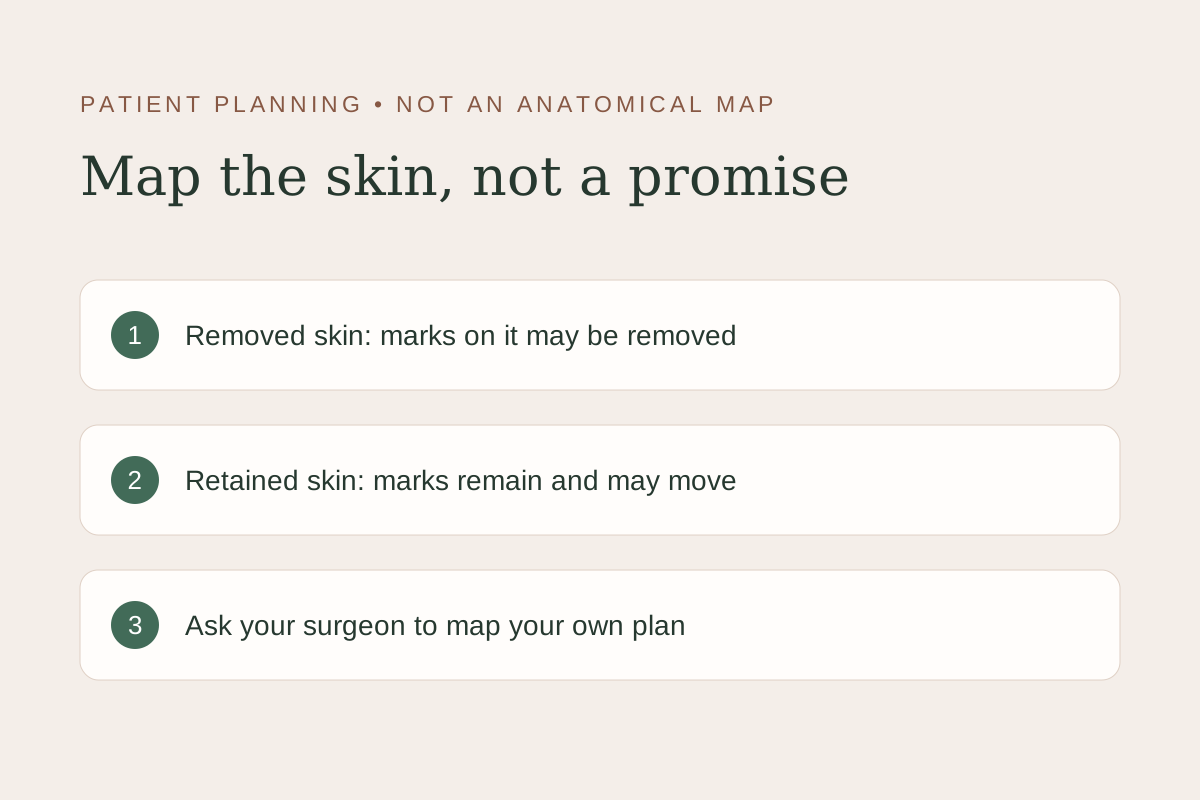
During consultation, ask the surgeon to point out relevant differences from side to side while you stand naturally. Discuss scars, the navel, folds and the waist outline. If you have noticed a new lump, painful area or sudden change, identify it as a symptom needing evaluation rather than assuming it is normal asymmetry. Baseline photographs can be useful when taken consistently and kept as part of the medical record. Avoid repeatedly judging yourself through angled phone images, which can exaggerate differences. The purpose of documenting anatomy is not to find faults but to make the treatment discussion more accurate. Ask which asymmetries are caused by tissue the proposed operation addresses and which relate to structures it will not change.
What degree of improvement is realistic?
A surgeon may expect to reduce a difference without eliminating it. Ask for that distinction to be stated clearly. If one side has more loose skin or fat, the plan may not be identical on both sides, but you should understand the rationale. A claim of perfect symmetry can create an expectation that natural anatomy and healing cannot reliably meet. Describe which difference actually bothers you in daily life. A small discrepancy noticed only in magnified photographs may have a different significance from a fold that affects clothing fit. The decision should reflect your priorities and the realistic scale of correction, not the idea that every measurable difference requires treatment.
How can posture and photography distort comparisons?
Compare images taken with similar posture, camera angle and lighting. Rotation, uneven weight-bearing and arm position can change the apparent waistline. Ask whether the photographs show the same operation that is being proposed and how long after surgery they were taken. Early swelling may obscure the eventual contour, while a carefully selected angle may hide a residual difference. Ask the surgeon to discuss ordinary outcomes and limitations rather than only a single ideal example. If computer simulations are used, treat them as communication aids rather than guarantees. They can help explain a goal but cannot predict individual healing, scarring or tissue response. Your written plan should describe achievable improvement in words as well as pictures.
When should a postoperative difference be assessed?
Ask when the team expects the contour to be sufficiently settled for an aesthetic assessment and which changes require earlier medical review. Do not decide from a new postoperative photograph alone that a revision is necessary. Conversely, do not ignore a sudden change or associated symptoms because asymmetry was discussed as a normal possibility. Follow the clinical team's contact instructions. If you return home from Korea before final review, agree on how photographs, local examination and remote consultation will be used. Clarify revision policies without assuming that a policy guarantees complete correction. A realistic baseline and a clear follow-up process make it easier to distinguish expected variation, a complication and a stable cosmetic concern that deserves a later discussion.
Put this information into your consultation
Use the consultation checklist and budget worksheet to record your questions. Explore tummy tuck clinics in South Korea and doctor profiles before asking a clinic about your individual plan.
Sources & further reading
Source links support the topic or the attributed provider details. Practical preparation prompts are editorial guidance. Checked 20 October 2026