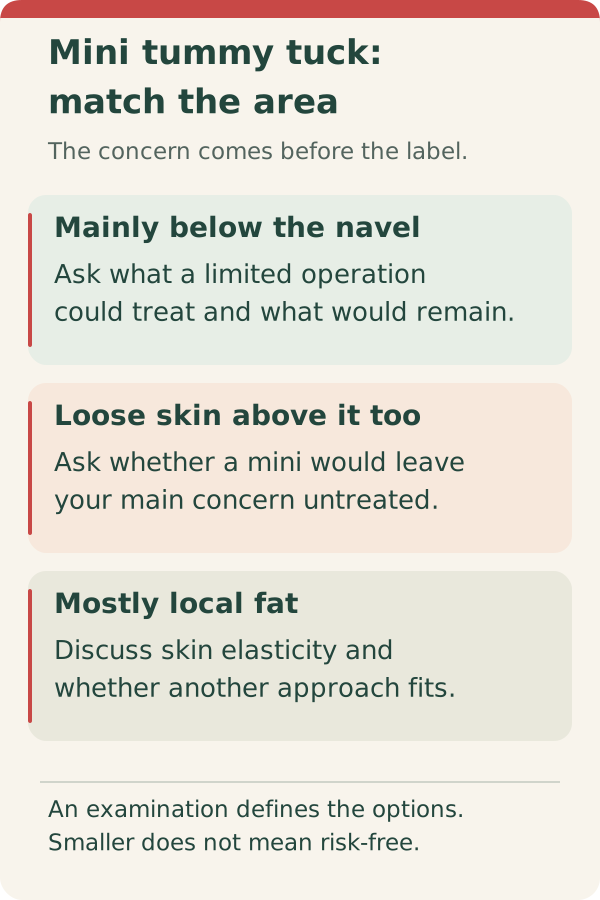
- Panniculectomy primarily removes an overhanging apron.
- Clarify whether wall tightening or broader contouring is included.
- Insurance decisions require direct written confirmation from the insurer.
What is the difference between panniculectomy and tummy tuck?
A panniculectomy is focused on removing the overhanging tissue. ASPS distinguishes it from tummy tuck surgery because abdominal muscles are typically not tightened. Ask what that means for the upper abdomen, navel and waist in your proposed operation. If the main difficulty is managing a heavy apron or recurrent skin problems, explain those symptoms clearly and bring the relevant medical history. If your main concern is overall contour, say that too. The surgeon needs to understand both functional and aesthetic priorities. Do not assume that the same scar implies the same internal work. Request a plain-language description of what will be removed, what will be tightened if anything and what is intentionally left untreated. This is particularly important if a quotation uses the two procedure names interchangeably.
What symptoms should I document before assessment?
Keep a factual history of any rashes, wounds, difficulty with hygiene or interference with daily activities. Include when symptoms occur, treatments already tried and which clinician assessed them. This information helps a medical evaluation; it should not be rewritten to fit a surgical or insurance category. Active skin symptoms may need their own treatment before elective surgery is considered. Ask your clinician whether the problem is related to the skin fold or has another cause. Photographs can document changes when your healthcare team requests them, but they should be shared through an appropriate clinical channel. A travel coordinator cannot replace a medical assessment. If someone promises that a tummy-tuck package will cure every skin symptom, request the treating surgeon's explanation of the expected benefit and the possibility of persistent or recurrent problems.
Does a medical reason guarantee insurance coverage?
Coverage rules depend on the insurer, jurisdiction and individual policy. A Korean clinic's description of an operation as reconstructive or medically necessary does not determine what an overseas insurer will pay. Ask your insurer directly before making financial commitments and obtain the requirements in writing. Distinguish preauthorization from a guarantee of final reimbursement. Request an itemized proposal that separates any functional skin-removal procedure from optional contouring components. Also confirm whether follow-up, wound treatment and complications abroad are covered. If the surgery is self-funded, the distinction still matters because it defines what you are purchasing. A low quote for apron removal should not be compared with a comprehensive contouring operation as if the intended result were identical. The clinical description should lead the comparison, with price considered after the scope is clear.
What contour changes may remain after apron removal?
Ask how the abdomen is likely to look and function after the proposed procedure, including residual upper fullness, navel position and scars. Review examples of the same operation performed for a similar starting problem. Patients may be satisfied with relief from an overhang even if the waist is not dramatically reshaped; others may want a broader aesthetic discussion. Neither priority should be assumed from your weight-loss history. Discuss recovery assistance, wound monitoring and the possibility that additional contouring would be a separate future decision. If travelling to Korea, arrange the handover to your usual clinician before departure and keep the operation record. The best-informed choice is based on a shared treatment objective, not on which label sounds more comprehensive or more likely to be reimbursed.
Put this information into your consultation
Use the consultation checklist and budget worksheet to record your questions. Explore tummy tuck clinics in South Korea and doctor profiles before asking a clinic about your individual plan.
Sources & further reading
Source links support the topic or the attributed provider details. Practical preparation prompts are editorial guidance. Checked 20 October 2026