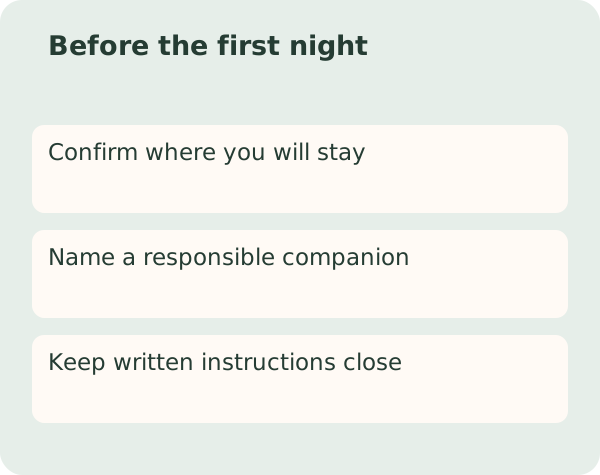
- Get individual positioning and movement advice.
- Choose accessible accommodation over specialised gadgets.
- Discuss sleep problems before adding sedating products.
What sleeping position fits your operation?
Ask how the team wants you to lie and whether the advice changes as you recover. Do not assume a position shown in a video suits your incision or any abdominal-wall repair. Ask staff to demonstrate getting into and out of the position and explain where support is useful. If you have back, hip or breathing problems, mention them. A position that protects one area but makes another condition difficult may need adaptation. Your team can help resolve that conflict more reliably than repeated trial and error after discharge.
Do you need a recliner or special pillows?
Before surgery, check bed height, available space and the route to the bathroom. Place necessary items where you can reach them without twisting or stretching. Arrange help with changing bedding and moving heavy furniture. If you consider renting a recliner or buying specialised pillows, ask whether they are useful for your plan before spending money. Expensive recovery equipment is not automatically necessary. The important question is whether you can rest and change position safely with the support you have.
What if pain or medicines disturb sleep?
Tell the team if pain, nausea, anxiety or garment discomfort prevents rest. Each may require a different response. Do not add sleeping tablets, sedating antihistamines or alcohol without checking with the prescriber, particularly when taking postoperative medicines. If you already use sleep treatment, make sure the anaesthesia team knows. Ask which symptoms during the night should prompt a call and who is available. A companion should have those instructions as well as the clinic number, especially in unfamiliar accommodation.
How should rest fit with walking?
Rest does not mean you should invent a strict bed-rest routine. Follow the movement advice given by your clinical team and ask how it fits around sleep. If getting out of bed is difficult, request another demonstration or a review of assistance needs. Avoid setting arbitrary alarms for activities unless the team asks you to do so. Keep the plan simple enough to follow when tired. If you have drains or a garment, ask how to manage them overnight and what to do if something becomes uncomfortable or displaced.
When can the sleep setup change at home?
Ask when positioning restrictions can be reviewed and whether the journey home presents different challenges. Your own bed may be very different from the accommodation used in Korea, so consider the setup before departure. Ask someone to help prepare it if necessary. If sleep remains poor, arrange appropriate clinical advice rather than assuming it is a cosmetic issue that must be tolerated. Recovery planning should account for ordinary comfort and function, while keeping decisions about medicines and restrictions with the treating professionals.
Put this information into your consultation
Use the consultation checklist and budget worksheet to record your questions. Explore tummy tuck clinics in South Korea and doctor profiles before asking a clinic about your individual plan.
Sources & further reading
Source links support the topic or the attributed provider details. Practical preparation prompts are editorial guidance. Checked 20 October 2026